Plymouth's Conservatory Roof Specialists
Conservatory Roof Styles & Shapes Compared
Nearly every conservatory in the South West is one of a handful of roof shapes: Victorian, Edwardian, lean-to, gable-end, double-hipped, or an L, P or T-shape made from two sections joined together. All of them can take an insulated SupaLite™ warm roof — the shape mainly affects how long the install takes, not whether it can be done.
- Warm in winter, cool in summer
- No more leaks or condensation
- Fully insulated tiled roof systems
No pushy sales · Same-day reply · 10-year insurance-backed guarantee
A simple, considered approach.
Find your conservatory roof shape
Conservatory roofs come in a small number of recognisable shapes, and knowing which one you have makes every later decision easier — the number of roof faces, the ridge length and any valleys all shape the survey, the timings and the quote. This page compares the shapes side by side and links through to the detailed page for each one.
Whichever shape you have, the job itself is the same: a warm, insulated tiled roof in place of tired glass or polycarbonate. If you want the numbers first, the cost and prices guide breaks it down by shape, and Building Regulations and planning permission explains the approvals side.
Why most older conservatory roofs stop working.
Almost every project we visit starts with the same set of complaints.
Too hot in summer
Glass and polycarbonate roofs trap solar heat and make the room unusable.
Too cold in winter
Poor insulation lets warmth escape and pushes up your heating bills.
Leaks & condensation
Aging seals and single-skin roofs let damp in and cause recurring leaks.
Loud during rain
Thin roof materials amplify noise so the room never feels settled.
Why the shape matters
- Number of roof faces — every additional face adds a junction that has to be set out, flashed and tiled properly.
- Valleys — L, P and T-shapes have an internal valley where two roof sections meet. It's the single most common leak point on the old roof and needs proper detailing on the new one.
- Ridge length — long ridges on double-hipped and gable roofs sag and fail in the middle first on old aluminium systems.
- Pitch — shallow lean-to pitches need confirming against the tile manufacturer's minimum (usually 12.5°) at survey.
- Time on site — 2 days for a simple lean-to, 4–5 for a large wrap-around. Cost follows size far more than shape.
A complete insulated warm-roof system.
Engineered to building-reg standards and finished beautifully inside and out.
Conservatory roof shapes side by side
| Style | How to recognise it | Best suited to | Typical install |
|---|---|---|---|
| Victorian | Three-faceted bay front meeting a central ridge | The most common shape in Plymouth and the South West | 3–4 days |
| Edwardian | Square or rectangular with a hipped front and flat front wall | Maximises usable floor space; furniture fits the corners | 2–3 days |
| Lean-to | One single slope running from the house wall to the front | Common on bungalows and low-eaves rear extensions | 2 days |
| Double-hipped | A longer ridge with sloping hipped ends on both sides | Wide rear extensions where one hipped end looks short | 3–4 days |
| Gable-end | Triangular vertical front wall with a high, dramatic ridge | Best headroom and the most house-like finish once tiled | 3–4 days |
| P-shape | A lean-to run joined to a Victorian or Edwardian section | Larger wrap-around rooms; two roof sections and a valley | 4–5 days |
| L-shape | Two roof sections meeting at a right angle over an L footprint | Handled as a bespoke design from survey measurements | 4–5 days |
| T-shape | A central projecting section off a longer run | Usually on wide houses; designed as a bespoke roof | 4–5 days |
| Bespoke / one-off | Curved, split-level, wrap-around or non-standard footprints | Designed individually after the survey | Confirmed at survey |
Install times assume a straightforward strip-out and no structural remedial work. Your survey confirms the actual programme before anything is booked.
The shapes in a little more detail
- Victorian — three facets across a bay front with a steep central ridge. The most common shape we replace in Plymouth.
- Edwardian — square or rectangular with a flat front, so every corner of the floor is usable.
- Lean-to — one clean slope. Simplest, fastest and usually the lowest cost per square metre.
- Double-hipped — a longer ridge with hipped ends both sides, common on wide rear extensions.
- Gable-end — a tall triangular front wall. Once tiled it reads most like a genuine extension.
- P-shape — a lean-to run joined to a Victorian or Edwardian section, giving two distinct zones in one room.
- L-shape and T-shape — two roof sections meeting at a valley. There's no separate page for these because the work is the same as a bespoke roof: designed from your survey measurements rather than a standard shape.
- Orangery-style roofs — a glazed lantern set into a flat perimeter roof is a different build again. We assess those individually rather than offering them as a standard service, so please ring before assuming it's a job we can take on.
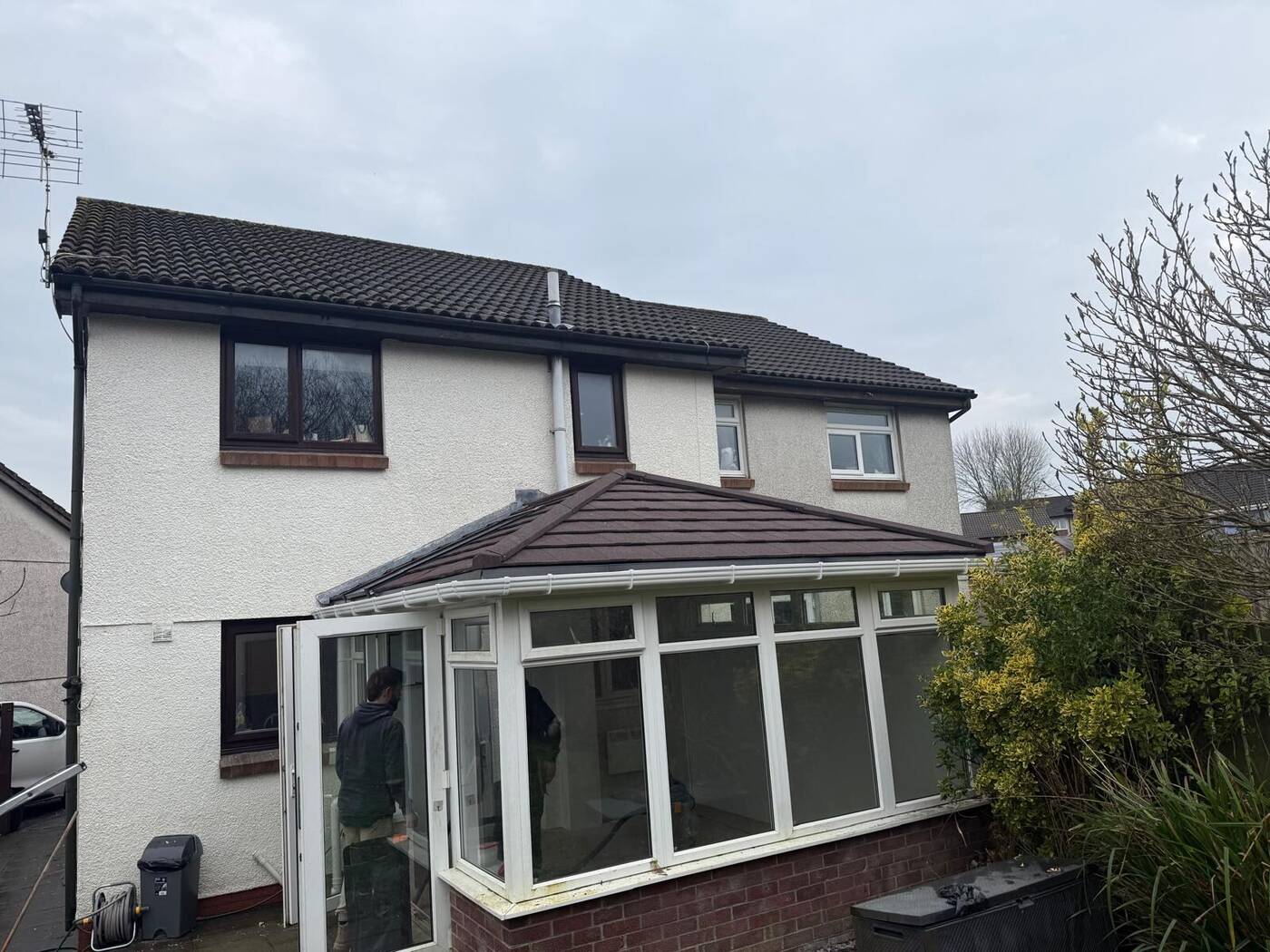
Before & after — the same job, whatever the shape.
Drag the slider to see a typical warm-roof transformation.
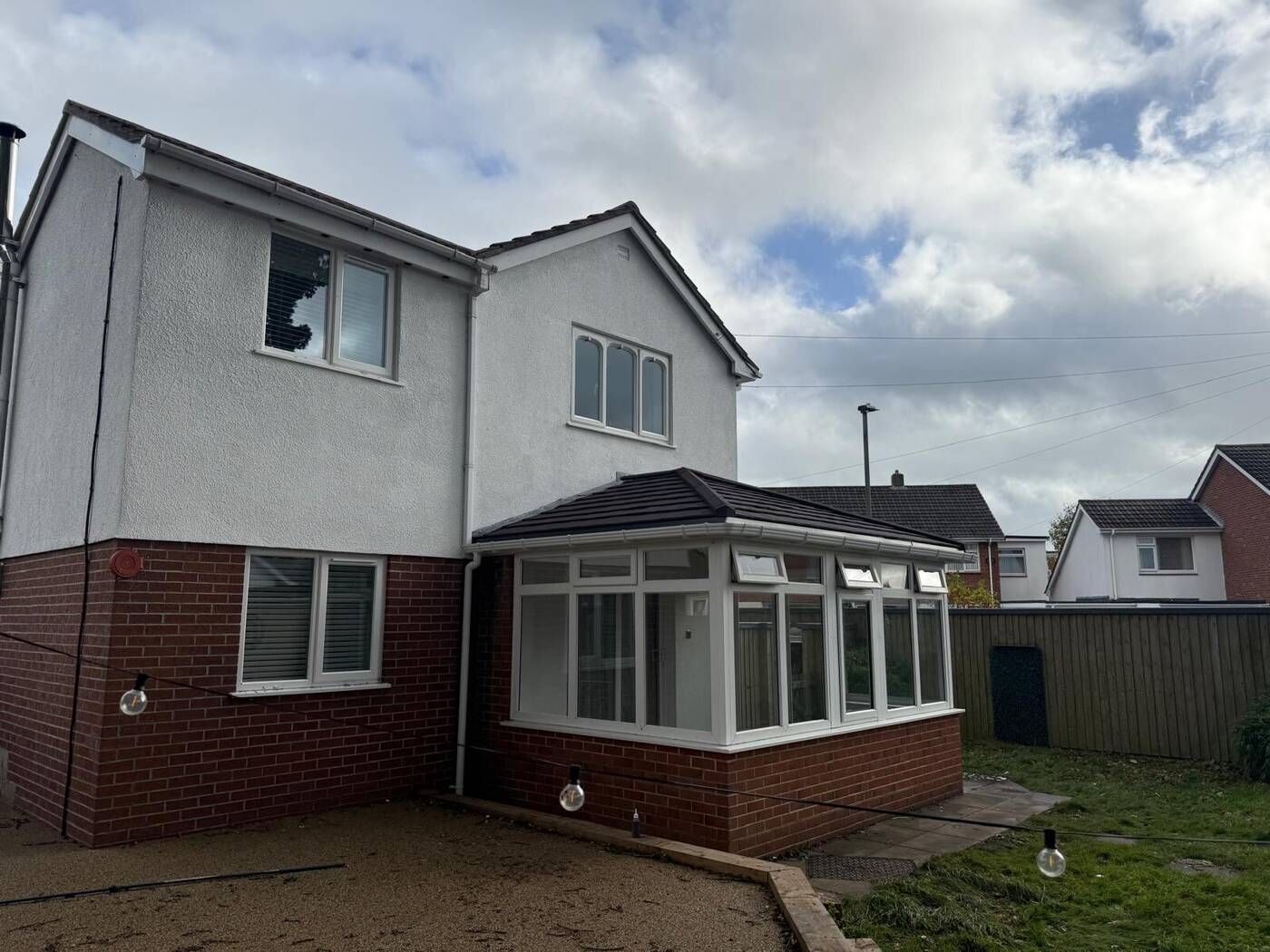
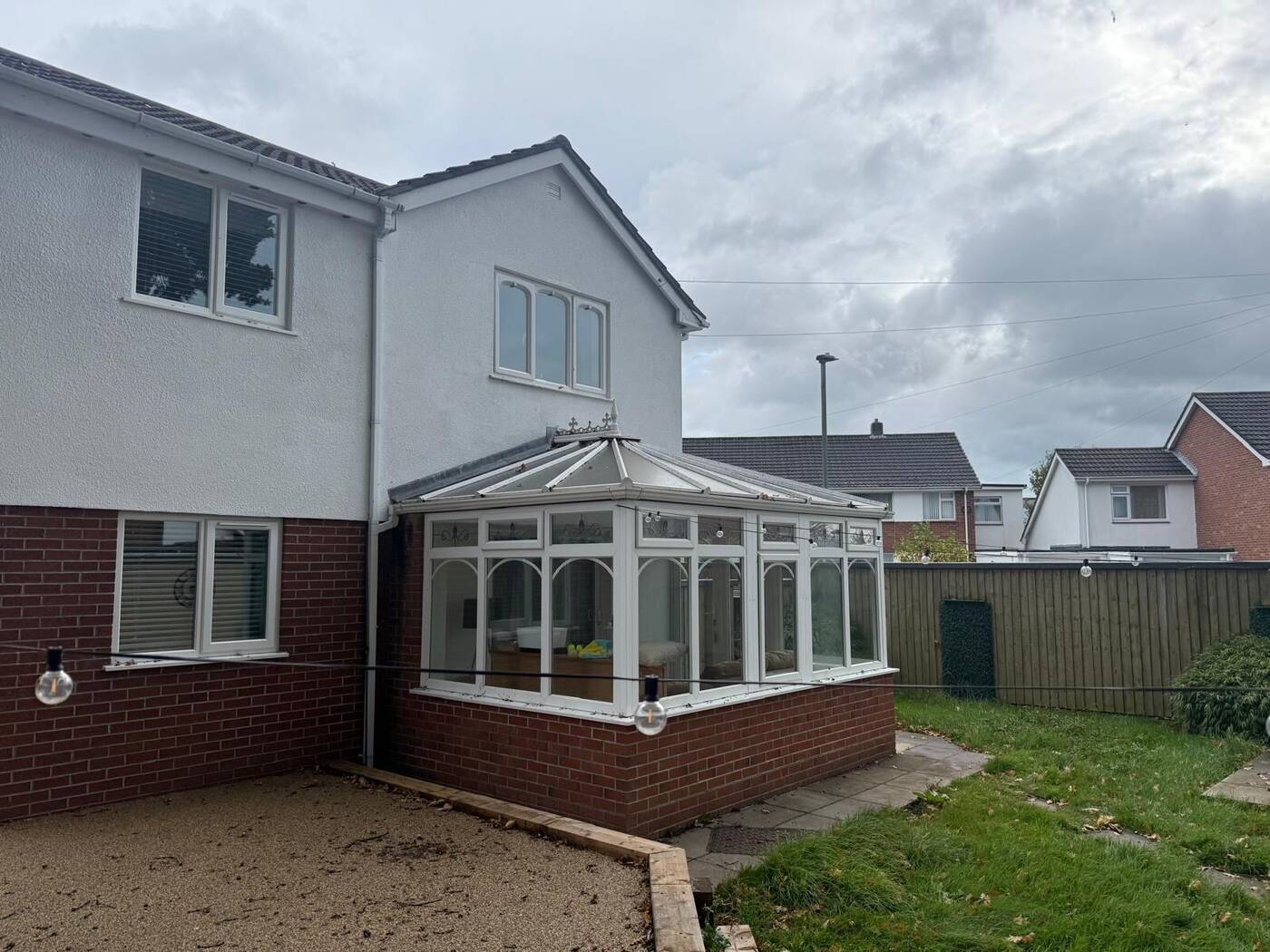
Plymouth — glass conservatory roof replaced with a SupaLite warm tiled roof.
Drag the slider to compare
Four clear steps from first visit to finished room.
Survey
We visit, measure and discuss exactly how you want to use the room.
Specify
A clear written quote — materials, finish and timeline up front.
Install
Old roof off, fully insulated warm-roof system on, by our own crew.
Finish
Plastered ceiling, full clean-down and walk-through with you.
A conservatory you actually want to spend time in.
Cool in summer
No more trapped heat — the room stays comfortable on the hottest days.
Warm in winter
Insulated to modern building-reg standards so you keep the heat in.
10 year guarantee
Insurance-backed guarantee, plus a 40-year guarantee on the tiles.
Fast install
Most projects are completed in just 2–4 days by our own crew.
What stays the same across every shape
- The same SupaLite™ system — engineered to your footprint, fitted to your existing frame.
- The same insulation performance — U-values from 0.18 down to 0.15 W/m²K.
- Tiles matched to your house roof — slate, pantile or plain tile.
- A plastered internal ceiling — flat, vaulted or coombed.
- Building Regulations handled for you — application, inspection and certificate.
- 10-year insurance-backed guarantee plus the 40-year tile manufacturer guarantee.
What does it cost?
Honest, typical price ranges so you can plan with confidence — every quote is bespoke after a free home survey.
Cost by shape
Every conservatory roof replacement starts from £6,000 fully fitted. Larger footprints and the more complex shapes sit higher:
- Lean-to — from £6,000; larger runs typically £7,000–£9,000.
- Edwardian and Victorian — from £6,000; 4m+ typically £7,500–£10,000.
- Gable-end and double-hipped — typically £8,000–£12,000 depending on size.
- P-shape, L-shape and T-shape — priced after survey; the valley detail and larger footprint put most in the £10,000+ bracket.
- Velux-style roof windows — £450–£650 each, fitted.
Try the conservatory roof cost calculator for a figure against your own shape and size, or read the full cost and prices guide.
Why our warm roof outperforms a traditional conservatory.
Frequently asked questions.
How do I know which conservatory roof style I have?+
Stand in the garden and count the roof faces. One slope running off the house is a lean-to. A flat front with two angled corners is Edwardian. A three-faceted bay front is Victorian. A vertical triangular front wall is a gable-end. Sloping ends at both sides of a long ridge is double-hipped. An L, P or T footprint means two roof sections joined by a valley. If you're still unsure, send us a photo on WhatsApp on 07703 607365 and we'll tell you.
Does the shape change the price of a warm roof?+
Shape matters less than size. Every replacement starts from £6,000 fully fitted, and the shapes with more faces, valleys or a longer ridge — Victorian, double-hipped, P-shape and T-shape — take a little more setting out and usually an extra day on site. The full breakdown is on our conservatory roof replacement cost page.
Can the SupaLite warm roof be fitted to any of these shapes?+
Yes. The SupaLite™ system is engineered around your existing footprint, so lean-to, Edwardian, Victorian, gable-end, double-hipped, L-shape, P-shape, T-shape and one-off bespoke layouts are all covered. We confirm the structure can take the new roof at the free survey before anything is agreed.
Which shape is quickest to convert?+
The lean-to — a single roof plane with no valleys or hipped ends is usually finished in 2 days. Victorian, gable-end and double-hipped roofs typically take 3–4 days, and larger P-shape or T-shape roofs can take a day longer again.
Do you replace orangery roofs?+
Orangery-style roofs with a glazed lantern set into a flat perimeter are a different build to a conservatory roof, so we look at those case by case rather than listing them as a standard service. Call us on 0330 043 3884 and we'll tell you honestly whether it's a job for us.
What if my conservatory doesn't match any standard shape?+
That's more common than you'd think — extensions, curved fronts, split levels and conservatories that wrap around a corner all come up. Those are handled as bespoke roofs, designed from the survey measurements rather than from a catalogue shape.
Got questions?
Straight answers to the things people ask us most.
Get your free quote
Tell us a little about your conservatory and we'll come back to you within 48 hours. No pushy sales, no obligation.
Free Brochure
Get Our Free Conservatory Roof Replacement Brochure
Everything you need to know about our SupaLite™ insulated warm-roof system — tile finishes, internal options, the 2–4 day installation process, prices from £6,000 fully fitted, and our 10-year insurance-backed guarantee.
- Sent straight to your inbox in seconds
- No pushy sales calls — review at your own pace
- Real Plymouth project photos and customer reviews