Plymouth's Conservatory Roof Specialists
Condensation in Your Conservatory?
Conservatory condensation happens when warm, moist air inside the room meets the cold inner surface of a glass or polycarbonate roof. The permanent solution is to replace the roof with an insulated tiled roof that keeps the ceiling surface warm, preventing moisture from forming.
- Warm in winter, cool in summer
- No more leaks or condensation
- Fully insulated tiled roof systems
No pushy sales · Same-day reply · 10-year insurance-backed guarantee
A simple, considered approach.
Understanding Conservatory Condensation
The short answer: condensation forms when warm, damp indoor air meets the cold inner face of a glass or polycarbonate roof. Reducing moisture and improving ventilation helps; the surface stays cold, so the drips come back. Removing the cold surface with an insulated warm roof is what stops it for good.
Condensation in a conservatory is more than just misty windows. It can cause dripping from the ceiling, damp patches, mould growth and damage to furniture and furnishings. Left untreated, it can affect your health — mould spores are a recognised trigger for asthma and respiratory problems (NHS).
Plymouth's mild, damp climate makes this worse than most of the UK. Below are the checks that tell you whether you are looking at condensation or a leak, what you can do yourself, and what a permanent fix costs — we survey free across Plymouth, Devon and Cornwall.
Why most older conservatory roofs stop working.
Almost every project we visit starts with the same set of complaints.
Too hot in summer
Glass and polycarbonate roofs trap solar heat and make the room unusable.
Too cold in winter
Poor insulation lets warmth escape and pushes up your heating bills.
Leaks & condensation
Aging seals and single-skin roofs let damp in and cause recurring leaks.
Loud during rain
Thin roof materials amplify noise so the room never feels settled.
Why Condensation Forms in Conservatories
All four of the factors below have to line up for condensation to form. Conservatories with single-skin roofs hit all four routinely.
- Cold roof surfaces — glass and polycarbonate cool rapidly, often dropping below the dew point of indoor air
- Cooking, bathing, breathing, plants — everyday activities generate moisture that migrates into the conservatory
- Poor ventilation — many conservatories have inadequate ventilation to remove moist air
- Big indoor/outdoor temperature differences — the bigger the gap, the worse the condensation
Dehumidifiers and improved ventilation can help manage symptoms but they don't solve the underlying problem of cold roof surfaces. The cold surface is the dew-point trigger; remove it and condensation stops.
Is it condensation or a leak?
- Timing — condensation is worst on cold mornings and after a damp evening indoors. A leak appears during or just after rain.
- Pattern — condensation forms broadly across the whole roof and the frames. A leak drips from one or two fixed points.
- Weather — if it happens on a dry, cold night, it is condensation.
- Feel — condensation leaves an even film of moisture on the inside face; a leak leaves staining that spreads outwards from one spot.
If it looks like a leak, our leaking conservatory roof page walks through those causes instead. Either way, do the checking from inside the room — never climb onto a conservatory roof.
What to try first, and when it isn't enough
- Maintenance — ventilate after cooking and drying washing, keep trickle vents open, and move large plants out. On a mild problem this can be enough.
- Managing it — a dehumidifier holds the humidity down, but it runs forever and the cold roof surface is still there.
- Replacement — where the ceiling drips every winter regardless of how you ventilate, the cold surface is the cause and only an insulated roof removes it.
A complete insulated warm-roof system.
Engineered to building-reg standards and finished beautifully inside and out.
How an Insulated Roof Eliminates Condensation
An insulated tiled roof replaces the cold surface with a warm, insulated ceiling. Because the internal surface stays close to room temperature, the dew point is never reached and there's no surface for moisture to condense on.
- Insulated ceiling maintains a warm internal surface temperature (typically 18°C+ on a winter day)
- Built-in ridge ventilation ensures proper airflow within the roof void
- No more dripping from the ceiling
- Eliminates the conditions that cause mould growth
- A dry, healthy environment for your family
The Build-Up That Stops Condensation
Condensation is fundamentally a temperature problem. The new roof solves it by keeping the inner surface warm — and that needs the right layers in the right order.
The build-up, top to bottom
- Composite tiles — outer weather layer, vapour-permeable
- Ventilated air gap — keeps the structure dry, exhausts at the ridge
- Vapour-control membrane — stops moisture migrating into the insulation
- 100–150mm PIR insulation — keeps the inner surface warm
- Plasterboard ceiling — final warm surface, plastered ready for paint
This is the same build-up used on modern energy-efficient house roofs, scaled and engineered for conservatory frames. It's been proven over millions of installations across the UK.
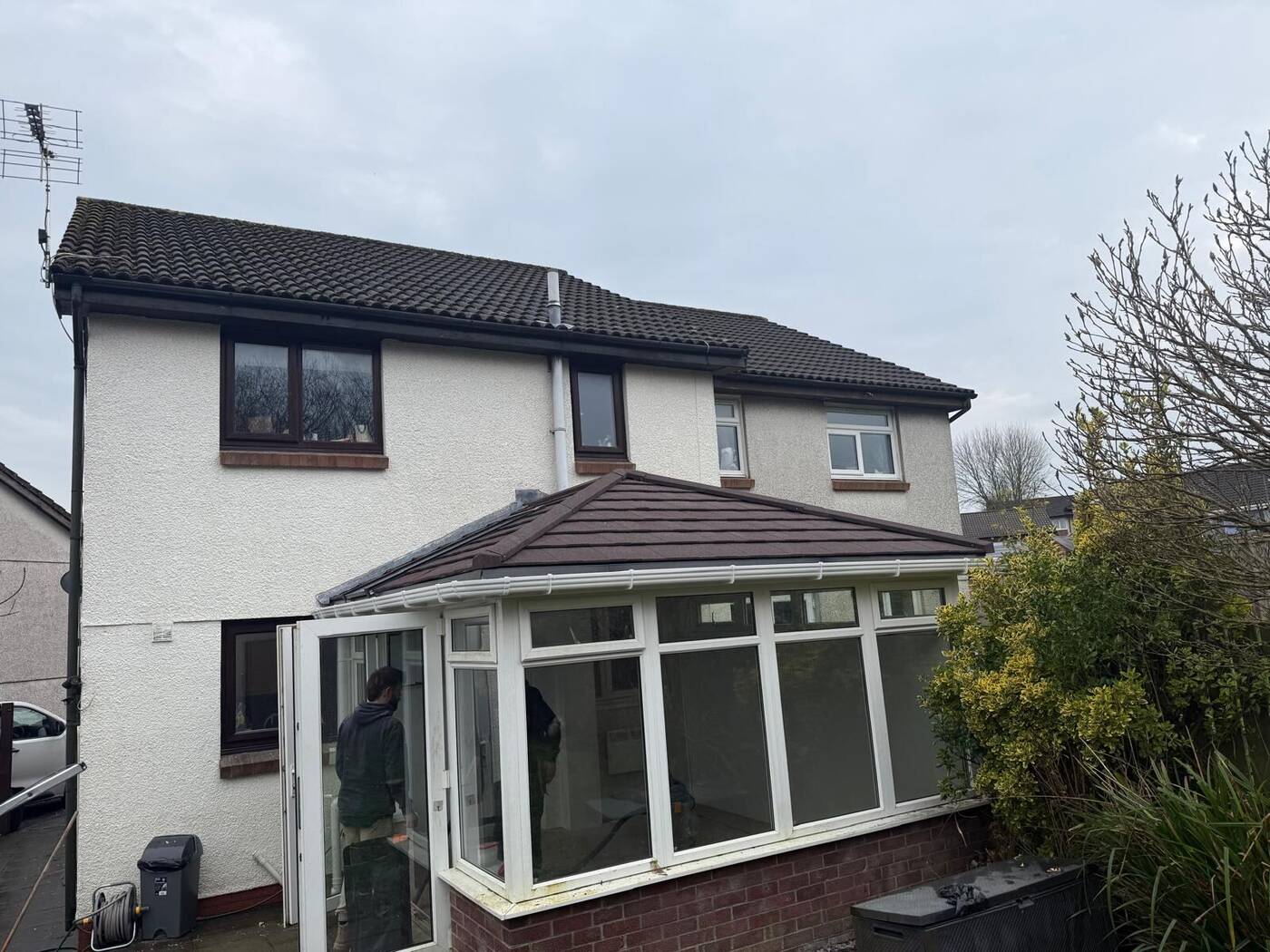
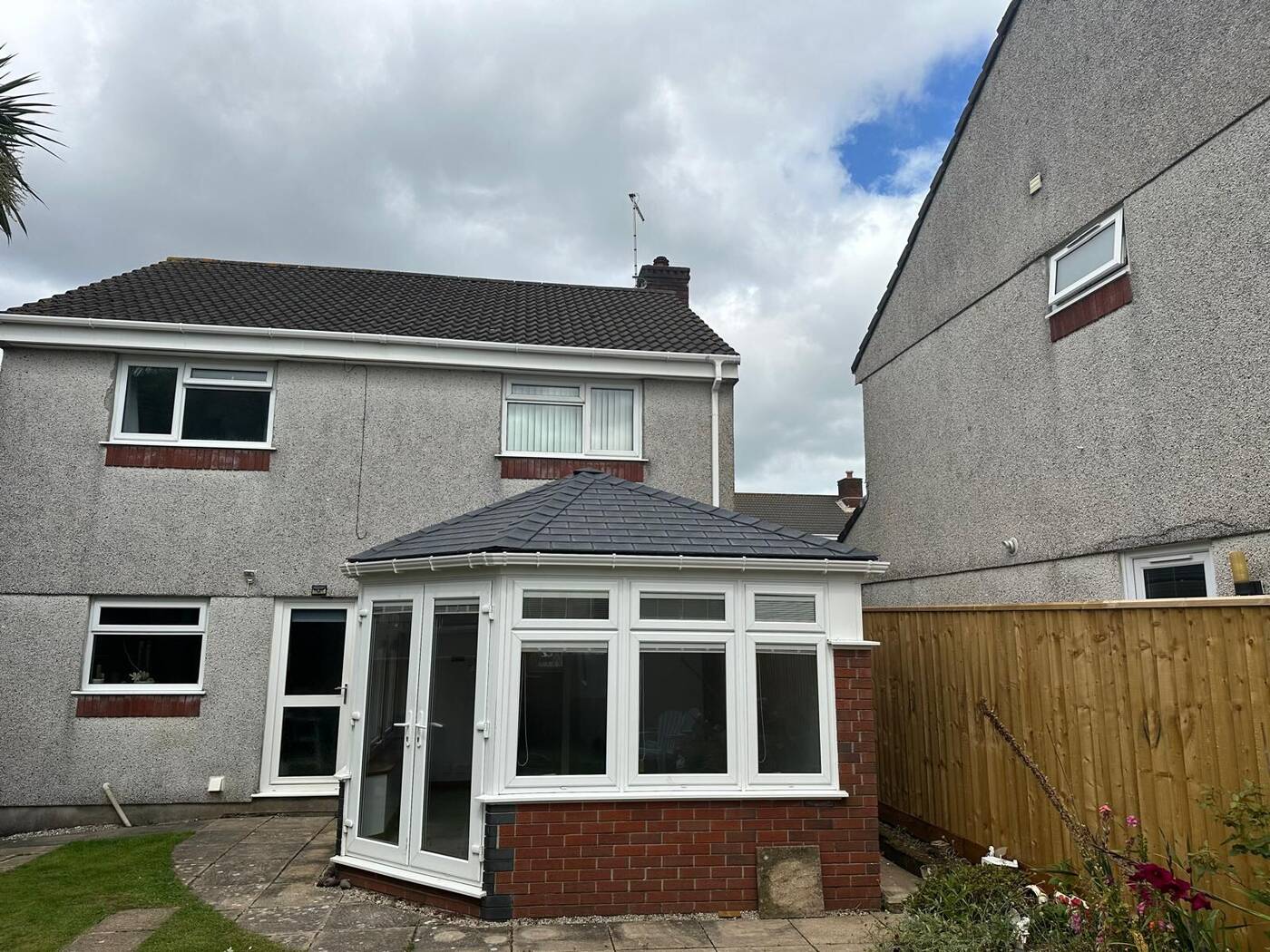
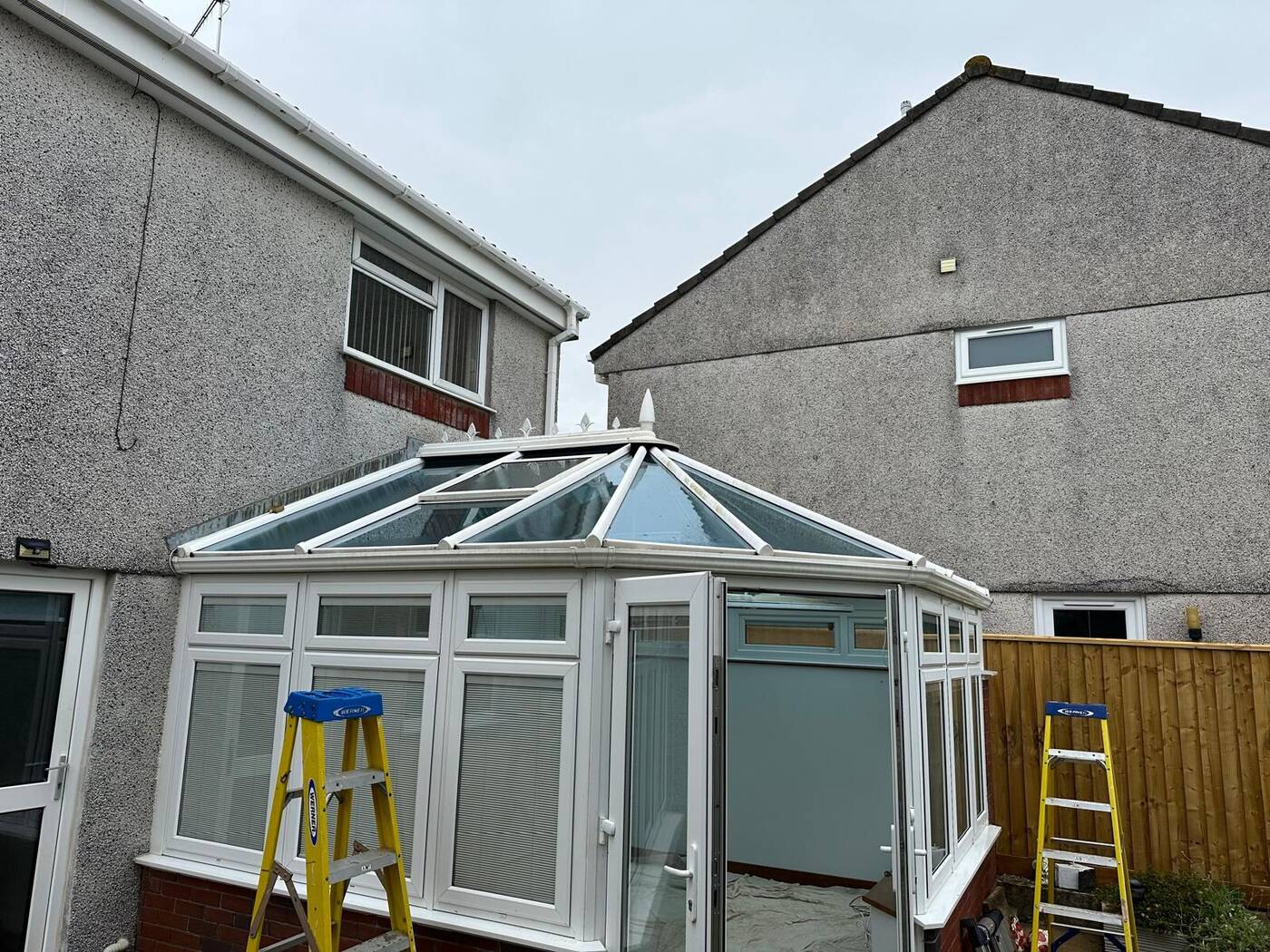
Before & after — ending conservatory condensation.
Drag the slider to see how a cold glass roof was replaced with a fully insulated warm roof, removing the cold surface that caused condensation.
Drag the slider to compare
Four clear steps from first visit to finished room.
Survey
We visit, measure and discuss exactly how you want to use the room.
Specify
A clear written quote — materials, finish and timeline up front.
Install
Old roof off, fully insulated warm-roof system on, by our own crew.
Finish
Plastered ceiling, full clean-down and walk-through with you.
A conservatory you actually want to spend time in.
Cool in summer
No more trapped heat — the room stays comfortable on the hottest days.
Warm in winter
Insulated to modern building-reg standards so you keep the heat in.
10 year guarantee
Insurance-backed guarantee, plus a 40-year guarantee on the tiles.
Fast install
Most projects are completed in just 2–4 days by our own crew.
Benefits of Solving Condensation
- Healthier environment — no damp, no mould, no musty smells
- Protect your belongings — furniture, fabrics and electronics stay dry
- No more ceiling drips — a permanent fix, not a temporary workaround
- Comfortable all year — the insulated roof also solves heat and cold problems
- No ongoing costs — unlike dehumidifiers, the solution requires no electricity or maintenance
- Quieter in rain — bonus benefit on Plymouth's wet winter days
Used to wake up to puddles on the conservatory floor where the ceiling had dripped overnight. Carpet was ruined twice. Since the new roof — not a single drop. Should have done it five years ago.
What does it cost?
Honest, typical price ranges so you can plan with confidence — every quote is bespoke after a free home survey.
What It Costs to Stop Condensation Permanently
The realistic options:
- Dehumidifier — £150–£300 up-front + ~£60 a year to run; manages symptoms only
- Roof vents / trickle vents — low cost; modest help, and can make the room colder
- Anti-condensation paint — low cost; reduces surface drips slightly but the mould risk remains
- Insulated tiled roof — from £6,000 fully fitted; the only permanent fix, and it also solves the heat and cold problems
Insulated roof price guide
- Small lean-to: from £6,000 fitted
- Edwardian / Victorian: from £6,000
- Large P-shape: from £6,000
Plymouth, Devon & Cornwall.
A locally based crew covering the South West — most projects are within 30 minutes of our Barbican workshop.
Stopping Condensation In Conservatories Across The South West
Plymouth's mild, damp climate is ideal for condensation. Recent jobs solving long-standing condensation problems include homes in:
- Plymouth — Plymstock, Plympton, Mannamead, Mutley, Peverell, Crownhill, Hartley
- South Hams — Ivybridge, Wembury, Yealmpton, Modbury
- South-East Cornwall — Saltash, Torpoint, Callington
- West Devon — Tavistock, Yelverton
Why our warm roof outperforms a traditional conservatory.
Frequently asked questions.
Will a dehumidifier fix conservatory condensation?+
A dehumidifier manages the symptom but doesn't fix the cause. It removes moisture from the air, but as long as the cold roof surface exists, condensation will keep forming. A roof replacement eliminates the cause permanently — no electricity, no emptying the tank, no ongoing cost.
Is conservatory condensation dangerous?+
Persistent condensation can lead to mould growth, which is linked to respiratory problems, allergies and worsening asthma. It can also damage the conservatory structure, fabrics and your belongings. Addressing it matters for both health and home.
How quickly does a new roof solve condensation?+
Immediately. Once the insulated roof is installed, the cold internal surface is gone — there's nowhere for condensation to form. Customers notice the difference from the very first day.
Why does my conservatory drip from the ceiling in winter?+
Warm, moist indoor air rises and meets the cold inner surface of the glass or polycarbonate roof. The water vapour condenses into liquid — exactly the same as breath on a cold window. When enough condensation forms, it runs down and drips. An insulated ceiling stays warm, so there's no cold surface to condense onto.
Can I just add more ventilation?+
Better ventilation helps reduce humidity but rarely solves the problem on its own — Plymouth winters bring cold, damp air, so opening a vent often makes the room colder rather than drier. Removing the cold surface (i.e. replacing the roof) is the reliable fix.
How much does it cost to fix conservatory condensation permanently?+
A full insulated tiled roof — the only permanent fix — starts from £6,000 fully fitted regardless of size or shape.
What if mould has already started growing?+
Treat existing mould first with a household mould-killer, then address the cause. Once the new insulated roof is fitted, the conditions that allow mould to grow disappear, so it doesn't come back. We can recommend a local damp specialist if the mould is widespread.
Will roof windows in the new roof bring condensation back?+
Modern Velux-style roof windows are double or triple-glazed with thermally broken frames, so the inner surface stays warm enough to avoid condensation in normal conditions. Fitting two skylights in a 3.5m × 3.5m roof is fine.
What is the dew point — and why does it matter?+
Dew point is the temperature at which water vapour condenses out of the air. In a conservatory in winter, indoor humidity might give a dew point of 12°C — but the inside of a glass or polycarbonate roof can be 5°C or colder, so condensation is guaranteed. An insulated ceiling stays at 18°C+, well above the dew point, so condensation simply can't form.
Do you cover Plymouth and surrounding areas?+
Yes — we cover Plymouth, Plympton, Plymstock, Ivybridge, the South Hams, Saltash, Torpoint, Tavistock and across South Devon and South-East Cornwall. Travel is included in the quoted price.
Got questions?
Straight answers to the things people ask us most.
Get your free quote
Tell us a little about your conservatory and we'll come back to you within 48 hours. No pushy sales, no obligation.
Free Brochure
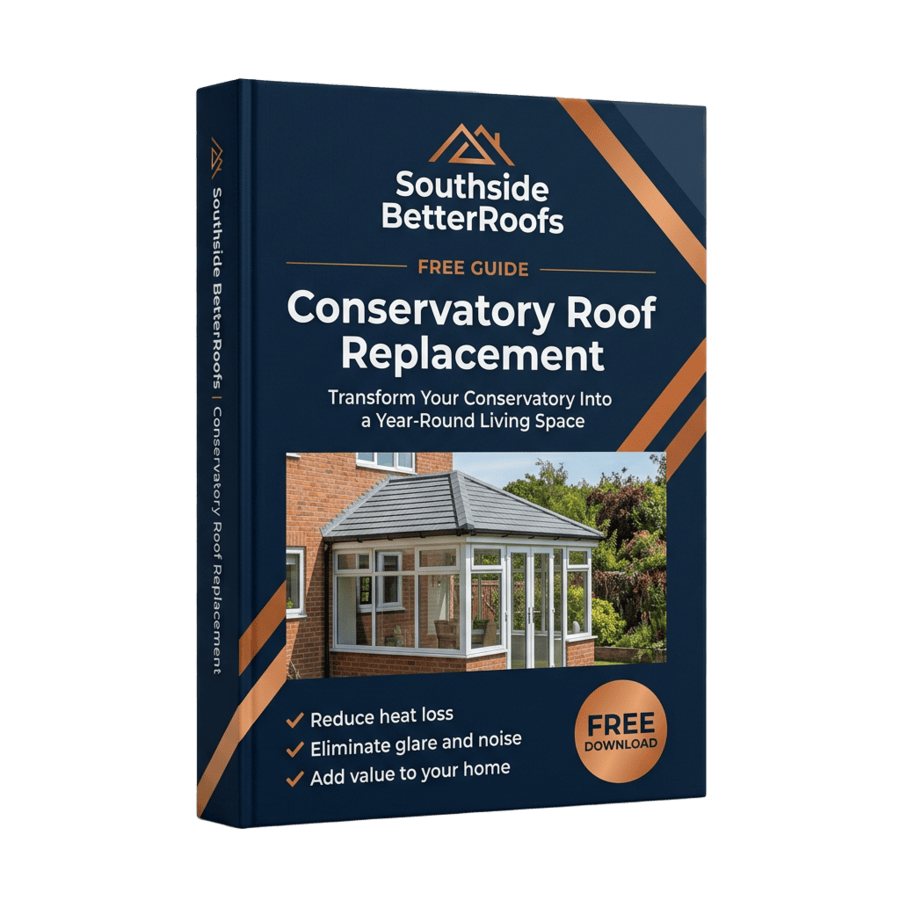
Get Our Free Conservatory Roof Replacement Brochure
Everything you need to know about our SupaLite™ insulated warm-roof system — tile finishes, internal options, the 2–4 day installation process, prices from £6,000 fully fitted, and our 10-year insurance-backed guarantee.
- Sent straight to your inbox in seconds
- No pushy sales calls — review at your own pace
- Real Plymouth project photos and customer reviews