Plymouth's Conservatory Roof Specialists
Insulated Tiled Conservatory Roofs
Insulated tiled conservatory roofs combine lightweight composite tiles — in slate, pantile or plain-tile profiles — with high-performance PIR insulation to create a solid, weatherproof roof that looks like a natural extension of your home and stays comfortable year-round.
- Warm in winter, cool in summer
- No more leaks or condensation
- Fully insulated tiled roof systems
No pushy sales · Same-day reply · 10-year insurance-backed guarantee
A simple, considered approach.
Premium Tiled Conservatory Roofs in Plymouth
An insulated tiled conservatory roof is the gold-standard replacement for tired glass and polycarbonate. It combines the kerb appeal of traditional roof tiles with the thermal performance of modern PIR insulation, creating a conservatory that genuinely looks and feels like part of the house — from the garden, from the street, and from inside the room.
Where a glass replacement still looks like a conservatory, a tiled roof reads as an extension. That visual difference is what most of our Plymouth customers come to us for, and it's what makes the biggest difference at sale time.
At Southside Better Roofs we install insulated tiled conservatory roofs across Plymouth, Devon and Cornwall. Replacing a conservatory roof on the existing footprint almost always falls under permitted development on the UK Planning Portal, but the thermal upgrade still needs Building Regulations sign-off — we handle that for you. Every roof is custom-designed to match your home's architecture: tile colour, profile, ceiling shape, skylights and integrated lighting are all decided with you at the survey.
Why most older conservatory roofs stop working.
Almost every project we visit starts with the same set of complaints.
Too hot in summer
Glass and polycarbonate roofs trap solar heat and make the room unusable.
Too cold in winter
Poor insulation lets warmth escape and pushes up your heating bills.
Leaks & condensation
Aging seals and single-skin roofs let damp in and cause recurring leaks.
Loud during rain
Thin roof materials amplify noise so the room never feels settled.
Tiled vs Glass vs Polycarbonate: Which Roof Is Right For You?
When considering a conservatory roof replacement, homeowners typically weigh up four options. Each has its place, but the long-term value gap is significant:
- Polycarbonate replacement panels — cheapest at around £6,000 but offers minimal insulation (U-value ~3.0 W/m²K) and develops the same problems within 5–10 years
- Modern self-cleaning glass — better than polycarbonate, around £6,000 but still poor thermal performance (U-value ~1.0 W/m²K) and still produces rain noise and solar gain
- Hybrid glass-and-tile roofs — a strip of glass with a partial tiled finish; better than full glass but still compromises on insulation and looks awkward from outside
- Insulated tiled roofs — the permanent solution that addresses temperature, noise, leaks, condensation and aesthetics in a single install
Tiled roofs offer the best long-term value because they solve every issue simultaneously and don't need replacing again in the homeowner's lifetime.
A complete insulated warm-roof system.
Engineered to building-reg standards and finished beautifully inside and out.
How an Insulated Tiled Conservatory Roof Is Built
We use approved, engineered tiled roof systems designed specifically for conservatory structures. These are purpose-built solutions — not general-purpose roofing materials adapted for the job.
- Lightweight engineered structure — works within the load capacity of your existing conservatory frame (typically 30–35 kg/m²)
- Range of tile colours and profiles — slate, pantile and plain-tile profiles in slate grey, charcoal, terracotta, ebony and brown
- Built-in PIR insulation — insulated panels integrated into the roof structure, not added as an afterthought
- Weathertight from day one — your home stays watertight throughout the install, even overnight
- Plastered internal ceiling — flat, vaulted or coombed depending on your preference
- Integrated electrics — downlights, mains-powered alarms and even speakers can be wired in at the time of install
Tiled vs Glass vs Polycarbonate — Side by Side
How an insulated tiled roof actually compares to the two roof types it most often replaces:
| Feature | Insulated Tiled | Glass | Polycarbonate |
|---|---|---|---|
| U-value | 0.15–0.18 W/m²K | 1.0–2.0 W/m²K | 2.5–3.0 W/m²K |
| Kerb appeal | Looks like an extension | Looks like a conservatory | Dated and obvious |
| Summer temperature | Comfortable | Hot | Very hot (40°C+) |
| Winter warmth | Warm — single radiator | Cold, expensive to heat | Very cold |
| Rain noise | Silent (like a house roof) | Loud | Very loud (70–80 dB) |
| Condensation | Eliminated | Common in winter | Very common |
| Lifespan | 40+ years | 15–20 years (seals fail) | 10–15 years |
| Building Regs | Full sign-off included | N/A (existing) | N/A (existing) |
| Typical cost | from £6,000 | from £6,000 | from £6,000 |
Tiled costs more upfront, but it's the only option of the three that solves every problem at once and lasts two to three times longer than glass or polycarbonate.
The Best Tiles for a Conservatory Roof
We fit lightweight composite roof tiles from the leading UK manufacturers — Tapco, Metrotile and Britmet. Each carries a 40-year guarantee. The right choice depends on your house style and the colour palette you want to match.
Tapco slate — best for most Plymouth homes
Riven-finish composite slate that closely mimics natural Welsh slate. The most popular choice in Plymouth — works equally well on traditional and modern properties, and pairs naturally with the slate-grey palette of most local houses. Available in slate grey, charcoal and ebony.
Metrotile pantile — best for terracotta and pantile homes
Steel-reinforced pantile profile, popular for properties with existing pantile or terracotta house roofs. Lightweight, very durable in coastal South West weather and the right pick if your house roof is anything other than slate.
Britmet plain tile — best for traditional and conservation properties
Traditional plain-tile profile in a range of colours. Suits older properties and conservation-area homes where a more traditional look is required. Often the right call in parts of Plymstock, Plympton and the South Hams villages.
Which Tile Suits Your House Style?
| Your house roof | Recommended tile | Best colour |
|---|---|---|
| Slate (most Plymouth terraces) | Tapco slate | Slate grey or charcoal |
| Modern grey/black tiles | Tapco slate | Ebony |
| Terracotta or red pantile | Metrotile pantile | Terracotta or brown |
| Traditional plain tile | Britmet plain tile | Brown or terracotta |
| Cream/buff render with clay tile | Metrotile pantile | Brown |
| White render, modern build | Tapco slate | Charcoal |
We bring physical samples of every tile and colour to the free survey so you can hold them up against your existing roof and brickwork. The match in daylight is always more reliable than what you see in a brochure.
Frame system: why we fit SupaLite™ exclusively
We fit on the SupaLite™ engineered frame system — LABC-approved, lightweight and proven across every common conservatory shape. Specialising in one system means a faster, cleaner install and a finish we can stand behind.
What to Expect During Installation — Day by Day
Most insulated tiled roof projects take 2–4 days from old roof off to plastered ceiling finished. Here's exactly what happens:
Strip-out & structural prep
Scaffold goes up first thing. We lift off the old glass or polycarbonate panels, strip the ridge bar and remove the old gutters. Existing frames are inspected and any small repairs made. The room is sheeted overnight so it stays watertight.
New roof structure & insulation
The lightweight engineered rafters, ridge and SupaLite insulated panels go on. The roof is fully weathertight by the end of the day — even if it rains, you stay dry inside.
Tiles, lead flashing & guttering
Composite tiles are fixed to the external face, lead flashing is dressed and chased into the brickwork at the wall junction, and new gutters and downpipes are connected up.
Plastered ceiling & finish
Internal plasterboard, skim plaster and any downlights or electrics are completed. We do a full clean-down, take the scaffold away and walk you through the finished room. Building Regs paperwork follows in the post.
Before & after — a real Plymouth tiled roof project.
Drag the slider to see how an insulated tiled roof transforms a tired glass conservatory into a true extension of the home.
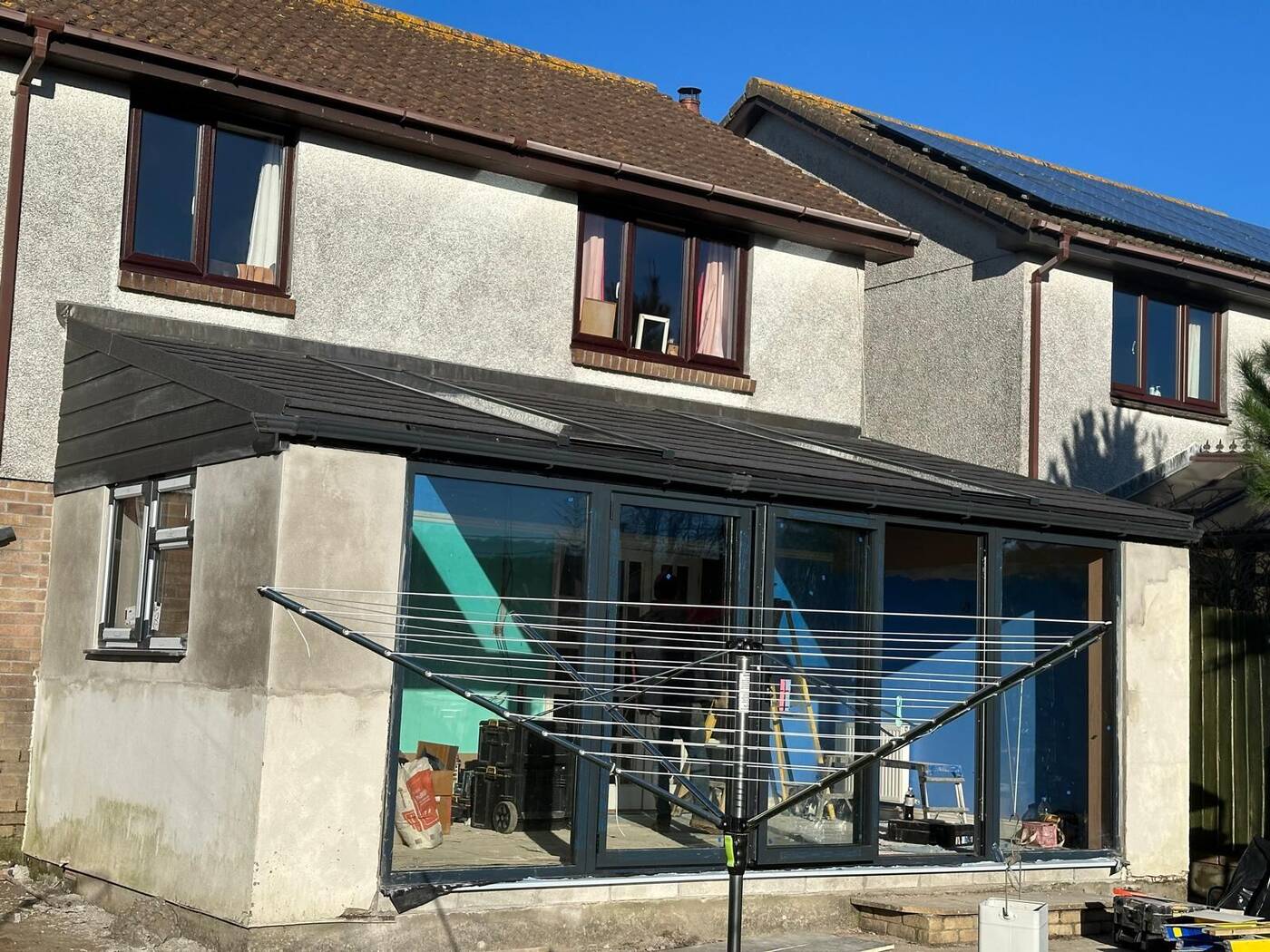
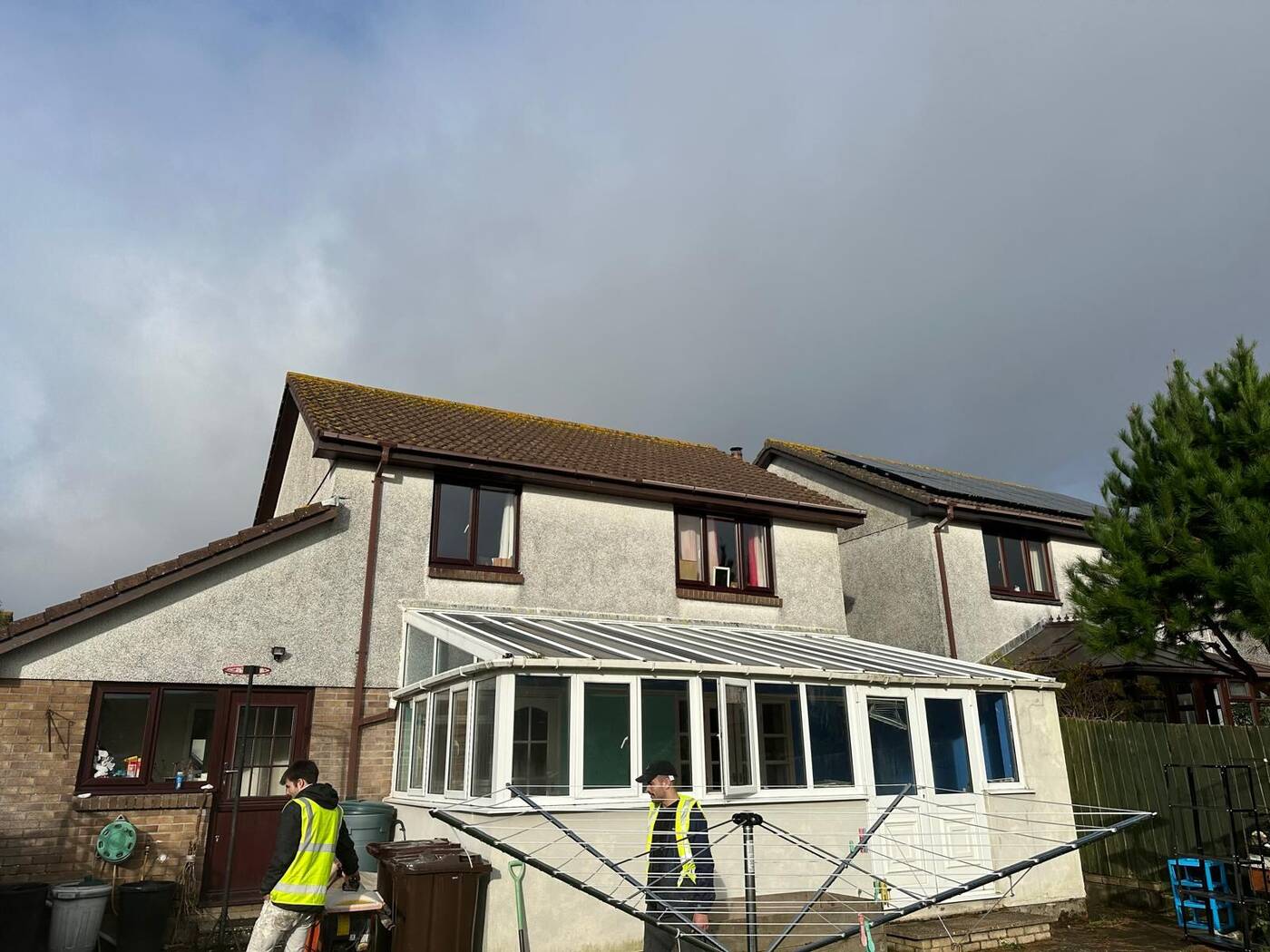
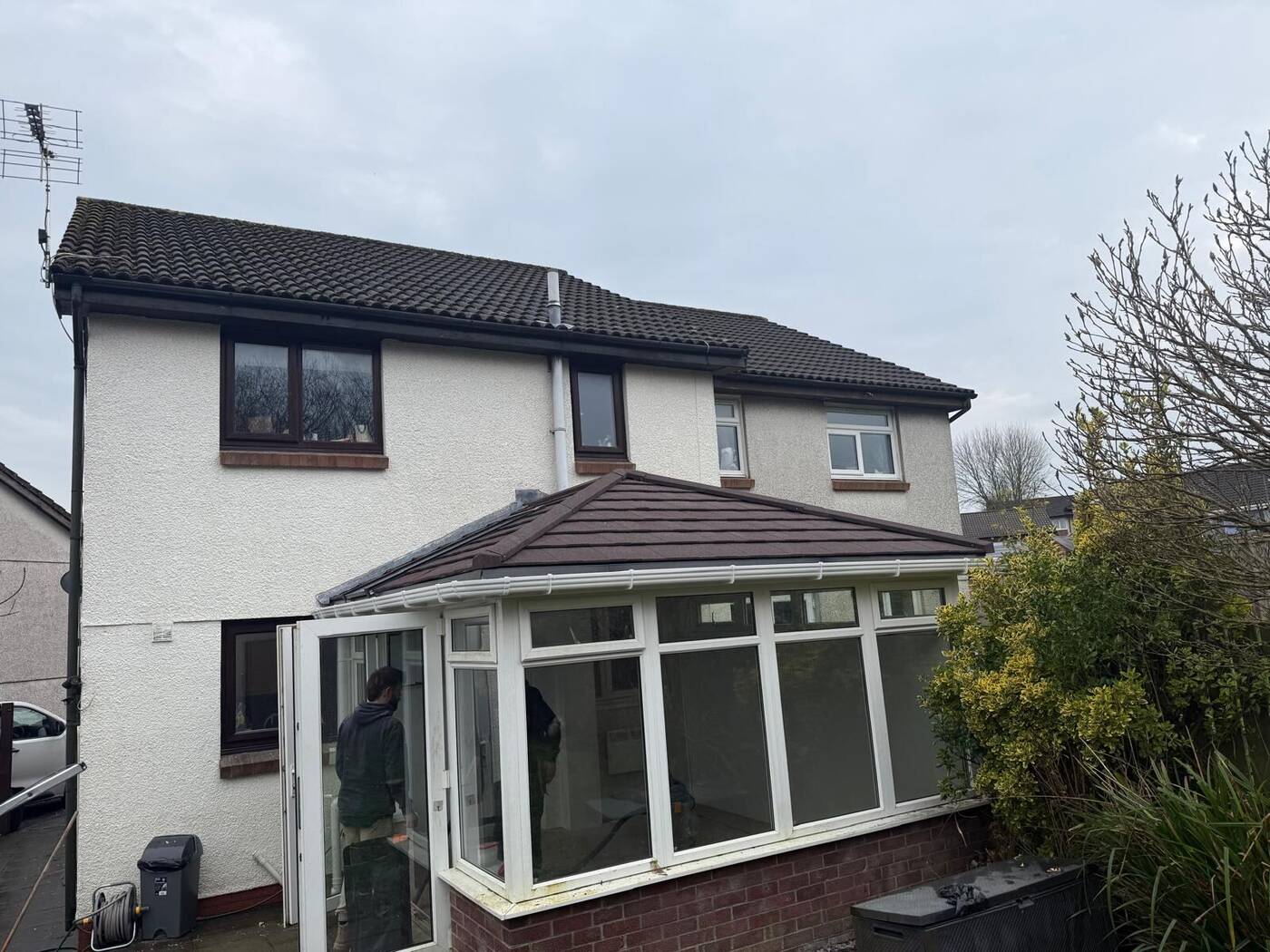
Plymouth — old glass lean-to roof replaced with a lightweight insulated tiled roof.
Drag the slider to compare
Four clear steps from first visit to finished room.
Survey
We visit, measure and discuss exactly how you want to use the room.
Specify
A clear written quote — materials, finish and timeline up front.
Install
Old roof off, fully insulated warm-roof system on, by our own crew.
Finish
Plastered ceiling, full clean-down and walk-through with you.
A conservatory you actually want to spend time in.
Cool in summer
No more trapped heat — the room stays comfortable on the hottest days.
Warm in winter
Insulated to modern building-reg standards so you keep the heat in.
10 year guarantee
Insurance-backed guarantee, plus a 40-year guarantee on the tiles.
Fast install
Most projects are completed in just 2–4 days by our own crew.
Benefits of an Insulated Tiled Conservatory Roof
- Beautiful kerb appeal — your conservatory reads as an extension, not an add-on; the single biggest visual upgrade you can make to the back of your house
- Tile choice that matches your home — slate, pantile or plain-tile in colours chosen against your actual brickwork at the survey
- Exceptional thermal performance — U-values as low as 0.15 W/m²K, better than most modern house ceilings
- Long lifespan — composite tiles last 40+ years with minimal maintenance and no fading
- Rain noise eliminated — solid construction makes the room as quiet as any other in the house
- Increased property value — turns a "glorified greenhouse" into genuine usable living space, with a Building Regs certificate that reassures buyers
- Insurance-backed guarantee — 10-year workmanship guarantee plus the 40-year tile manufacturer guarantee
- Lower energy bills — far less heating needed; many customers stop using the conservatory's radiator entirely in mild weather
Chose Tapco slate to match the house roof — looks brilliant from the garden. Inside is plastered like a normal ceiling and we've added two Veluxes. Wish we'd done it the day we moved in.
What does it cost?
Honest, typical price ranges so you can plan with confidence — every quote is bespoke after a free home survey.
Insulated Tiled Roof Prices in Plymouth
Realistic guide prices for fully-fitted insulated tiled conservatory roofs:
- 3m × 3m lean-to — from £6,000
- 3.5m × 3.5m Edwardian — from £6,000
- Victorian (3-facet) — from £6,000
- Large P-shape / gable — from £6,000
- Velux-style roof windows — £450–£650 each, fitted
How tile choice affects price
Standard composite tiles (slate grey, charcoal, terracotta) are included in the base price. Premium ranges and bespoke colours add roughly 5–10%. Skylights are quoted separately so you only pay for the ones you want.
What's included in the price
- Free home survey and structural assessment
- Full scaffolding for the duration of the project
- Removal and disposal of your old roof
- The complete SupaLite™ insulated tiled roof system
- Internal plastered ceiling, ready to decorate
- New gutters, downpipes and lead flashing
- Building Regulations application and sign-off
- 10-year insurance-backed workmanship guarantee, plus the 40-year tile manufacturer guarantee
No hidden extras — the headline price is the price you pay.
Payment Options
A tiled roof is a significant investment, so we keep payment terms flexible and transparent:
- Stage payments — a small deposit secures your install date, with the balance split between start of work and completion. You never pay for work that hasn't been done.
- Card or bank transfer — all major payment methods accepted, with full receipts for your records.
- No pressure, no hard sell — we'll talk through the options at the survey and let you decide in your own time.
Plymouth, Devon & Cornwall.
A locally based crew covering the South West — most projects are within 30 minutes of our Barbican workshop.
Insulated Tiled Roofs Fitted Across Plymouth & The South West
We're based in the Barbican and travel to homes across the South West every week. Recent insulated tiled roof projects include:
- Plymouth city — Mutley, Mannamead, Peverell, Hartley, Crownhill, Eggbuckland, Plymstock and Plympton
- South Hams — Ivybridge, Yealmpton, Newton Ferrers, Modbury
- South-East Cornwall — Saltash, Torpoint, Callington, the Rame Peninsula
- West Devon — Tavistock, Yelverton, Okehampton
Travel is included in every quote — no postcode surcharges. The person who quotes the job is the same person who oversees the install.
Why our warm roof outperforms a traditional conservatory.
Frequently asked questions.
What tile colours and styles are available for a tiled conservatory roof?+
We fit lightweight composite tiles in slate grey, charcoal, ebony black, terracotta and brown — in slate, pantile and plain-tile profiles. We bring physical colour samples to the survey and hold them up against your existing house roof and brickwork so you can see the match in daylight before you choose. Slate grey and charcoal are the most popular in Plymouth because they suit almost every property style.
Are insulated tiled conservatory roofs heavy?+
No — that's a common misconception. Our tiled roof systems are purpose-engineered to be lightweight: typically 30–35 kg/m², which is often less than the original glass roof plus aluminium frame. The vast majority of existing conservatory structures support them without any modification, which we confirm with a structural assessment at the free survey.
Can I add roof windows or skylights to a tiled conservatory roof?+
Yes, absolutely. We commonly fit Velux-style roof windows into tiled conservatory roofs to maintain natural light. Two skylights in a 3.5m × 3.5m roof works beautifully — you keep most of the daylight while losing all the glare and heat. Glazed feature panels are also possible for a more dramatic effect, and we can pre-wire downlights at the same time.
How does the insulation in a tiled conservatory roof actually work?+
High-performance PIR (polyisocyanurate) insulation is built into the roof panel structure. It sits between the outer tile surface and the internal plasterboard ceiling, creating a continuous thermal barrier with no cold bridges. The result is a U-value as low as 0.15 W/m²K — better than most modern house ceilings.
How much do insulated tiled conservatory roofs cost in Plymouth?+
All conservatory roof replacements start from £6,000 fully fitted, regardless of size or shape. Final cost depends on roof shape, tile finish, number of skylights and any internal finishing. Every quote is bespoke after a free home survey.
How long do the tiles last?+
The lightweight composite tiles we fit (Tapco slate, Metrotile, Britmet) carry a 40-year manufacturer guarantee and are designed to outlast that comfortably. The whole installation comes with a 10-year insurance-backed guarantee covering workmanship.
Will the new tiled roof match my house?+
That's the whole point of the way we choose tiles. We pick a colour and profile that complements your existing roof and brickwork — slate to match a slate house, pantile to match terracotta, plain-tile for traditional cottages. From the kerb, the conservatory looks like an integrated extension rather than an add-on. Customers regularly tell us neighbours assume they've had a brick extension built.
Do I need planning permission for a tiled conservatory roof?+
Almost never — replacing a conservatory roof on the same footprint normally falls under permitted development. Building Regulations approval is usually required because the thermal envelope changes; we manage the application and sign-off as part of the project.
How long does the install take?+
Most insulated tiled roof installs are completed in 2–4 days. We work as a single dedicated crew, your home stays watertight throughout, and we leave the site spotless on the final day. Larger Victorian, gable and P-shape conservatories may need an extra day or two.
Are insulated tiled roofs better than replacement glass panels?+
For most homeowners, yes — significantly. Modern self-cleaning glass panels are an improvement on old glass, but they still have a U-value around 1.0 W/m²K (5–7× worse than tiled), still cause solar gain in summer, and still produce rain noise. Tiled is the once-and-done solution.
What's the difference between an insulated tiled roof and a warm roof?+
They're the same product described two different ways. 'Insulated tiled roof' emphasises the tiled finish; 'warm roof' emphasises the thermal performance. Both refer to a solid, insulated replacement roof with composite tiles outside and a plastered ceiling inside. We use SupaLite™ for both.
Will a tiled roof add value to my home?+
Yes — and more than most other home improvements pound for pound. A glass conservatory is often listed as 'unusable in summer/winter' on estate-agent details, which puts buyers off. A tiled-roof conservatory is listed as a year-round room or a third reception, which directly improves the property's appeal and surveyed value. The Building Regs certificate that comes with the install also reassures buyers' solicitors.
Does a tiled roof completely block out the light?+
No — the room loses harsh overhead glare but keeps the daylight that comes through the windows. Most customers actually prefer the change because the room feels calmer and more usable. If you want to keep more overhead light, two Velux roof windows in a 3.5m × 3.5m roof give you the best of both worlds.
Got questions?
Straight answers to the things people ask us most.
Get your free quote
Tell us a little about your conservatory and we'll come back to you within 48 hours. No pushy sales, no obligation.
Free Brochure
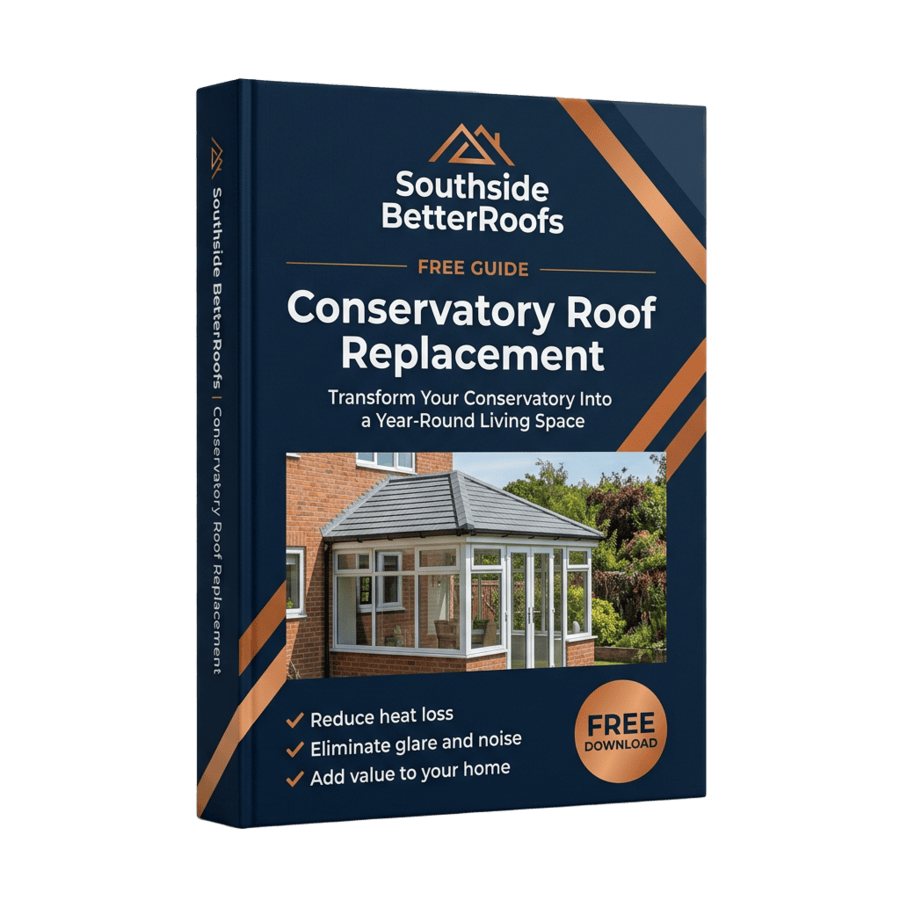
Get Our Free Conservatory Roof Replacement Brochure
Everything you need to know about our SupaLite™ insulated warm-roof system — tile finishes, internal options, the 2–4 day installation process, prices from £6,000 fully fitted, and our 10-year insurance-backed guarantee.
- Sent straight to your inbox in seconds
- No pushy sales calls — review at your own pace
- Real Plymouth project photos and customer reviews