
Plymouth's Conservatory Roof Specialists
Conservatory Too Hot in Summer?
An overheating conservatory is caused by the greenhouse effect through glass or polycarbonate roofs. The most effective permanent solution is replacing the roof with an insulated tiled roof that blocks solar heat gain while keeping the room bright through windows.
- Warm in winter, cool in summer
- No more leaks or condensation
- Fully insulated tiled roof systems
No pushy sales · Same-day reply · 10-year insurance-backed guarantee
A simple, considered approach.
Why Your Conservatory Overheats
The short answer: glass and polycarbonate roofs let solar energy in and trap the heat it creates. Blinds, films and fans take the edge off; the heat still arrives. Replacing the roof with a solid insulated roof stops it at the source, and the same insulation keeps the room warm in winter.
If your conservatory becomes unbearable during the summer months, you're not alone — it's the most common complaint we hear from conservatory owners across Plymouth. Below is how to judge how bad your room really is, what's worth trying first, and what a permanent fix costs.
We've measured surface temperatures of 55°C on the inside of a south-facing polycarbonate roof in late July. Air temperature inside the room hit 47°C. That's the same as a hot car parked in direct sun — well above the NHS heatwave safe-room guidance of keeping indoor spaces below 26°C — and it makes the room not just uncomfortable but genuinely unsafe for pets, plants and elderly relatives.
Blinds, fans and reflective films can reduce the problem slightly, but none of them address the root cause. The only permanent solution is to replace the roof.
Why most older conservatory roofs stop working.
Almost every project we visit starts with the same set of complaints.
Too hot in summer
Glass and polycarbonate roofs trap solar heat and make the room unusable.
Too cold in winter
Poor insulation lets warmth escape and pushes up your heating bills.
Leaks & condensation
Aging seals and single-skin roofs let damp in and cause recurring leaks.
Loud during rain
Thin roof materials amplify noise so the room never feels settled.
The Science Behind Conservatory Overheating
Solar radiation passes straight through transparent roof panels and is absorbed by everything inside — floor, furniture, walls, even the air. Those surfaces re-radiate heat at longer wavelengths that can't easily pass back out through the glass. The result is a one-way heat trap.
- Glass and polycarbonate transmit up to 80% of solar energy into the room
- Dark furniture and flooring absorb heat and radiate it back, making it worse
- Poor ventilation traps hot air at ceiling level — opening doors barely helps
- UV exposure fades furniture, carpets and soft furnishings, often within two summers
- Solar gain peaks between 11am and 4pm — exactly when families want to use the room
Checks you can make yourself
- Measure it — leave a room thermometer in the conservatory through a sunny afternoon. A peak above 30°C means no blind or fan will make the room comfortable.
- Note the orientation — south and west-facing rooms take the worst of it from late morning to early evening.
- Check the roof type — polycarbonate multi-wall sheets and clear glass both let solar energy through; older roofs rarely have solar-control glazing.
- Try cross-ventilation once — open the doors at both ends on a hot day. If it barely shifts the temperature, the heat is coming in faster than you can vent it.
- Look at the shading — a nearby tree or a neighbouring building can explain why one half of the room is tolerable and the other isn't.
Maintenance, partial fixes and replacement
- Maintenance — clean the roof panels from the ground, free up roof vents and service the door seals. Free or cheap, and worth doing.
- Partial fixes — blinds, solar film and portable cooling reduce the symptoms while they are in place, and need repeating or replacing over time.
- Replacement — where the room is unusable on any hot day, only a solid insulated roof stops the heat arriving in the first place.
Do all of this from ground level or from inside — a conservatory roof will not take your weight, and a ladder against the frame is not safe.
A complete insulated warm-roof system.
Engineered to building-reg standards and finished beautifully inside and out.
The Permanent Solution: Replace the Roof
An insulated tiled roof blocks solar heat gain at the source. Instead of solar radiation pouring through a transparent roof, the solid, insulated structure reflects and absorbs heat externally — keeping the interior cool naturally without any electricity or moving parts.
- Blocks up to 95% of solar heat transmission through the roof
- Maintains comfortable temperatures without air conditioning
- Natural light still enters through windows, doors and optional roof windows
- Eliminates UV damage to furniture and furnishings
- Your conservatory becomes usable throughout summer — including the hottest afternoons
- Same insulation also keeps the room warm in winter
What Makes a Roof Cool the Room
Two things matter for stopping summer overheating: stopping heat getting in, and stopping heat building up. A solid insulated roof does both.
The thermal layers
- Composite roof tiles — reflect a high proportion of incident sunlight before it ever reaches the structure
- Breather membrane and ventilation — any heat that does build up in the roof void is exhausted at the ridge
- 100–150mm PIR insulation — blocks the remaining heat from passing through to the inside
- Plasterboard ceiling — final thermal mass that stays close to room temperature all day
Net result: the inside surface of your new ceiling stays within a degree or two of room temperature even on the hottest day — instead of becoming a 55°C radiator above your head.
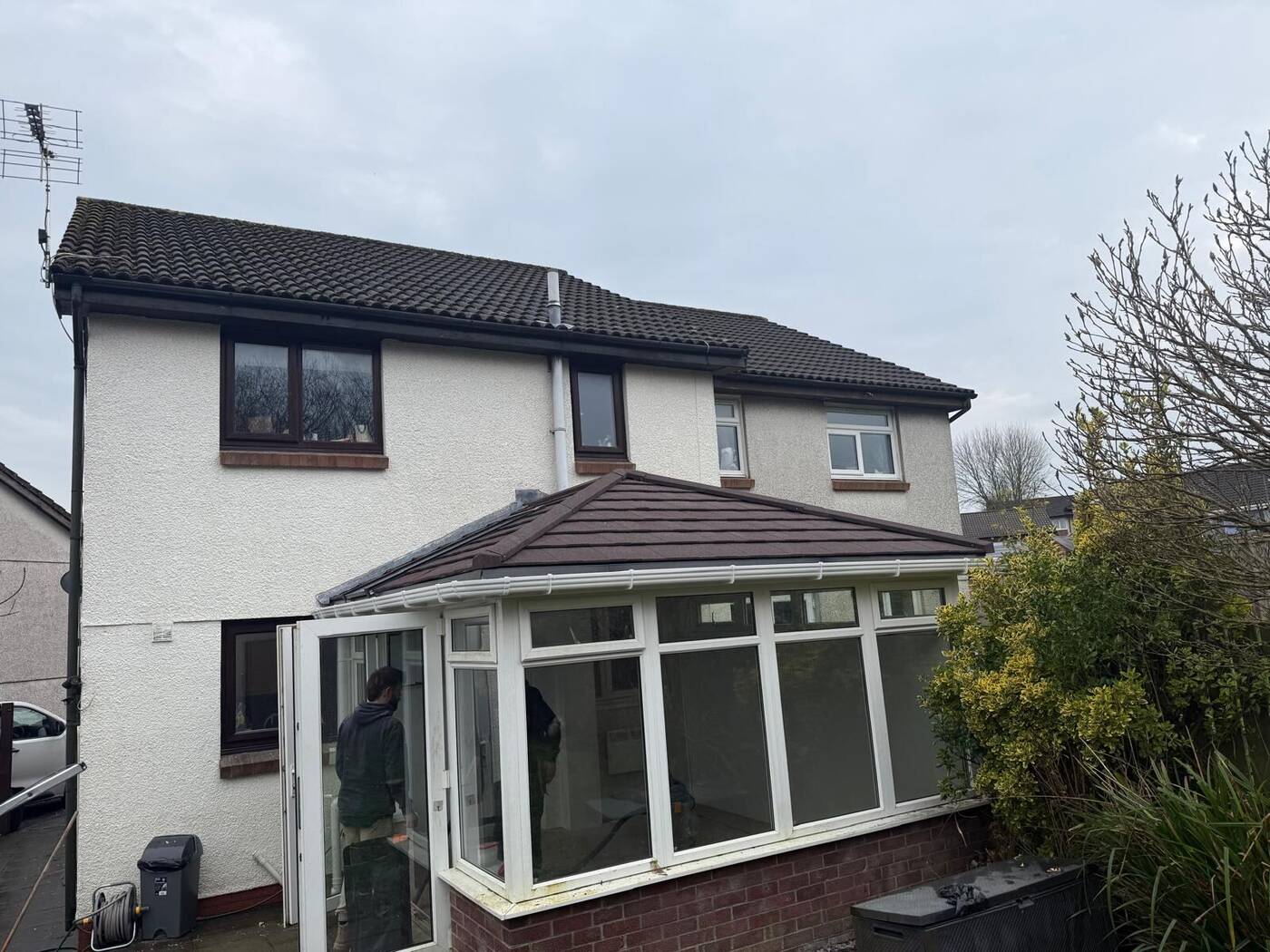
Before & after — fixing an overheating conservatory.
Drag the slider to see how replacing a glass roof with an insulated tiled roof finally makes a conservatory usable in summer.
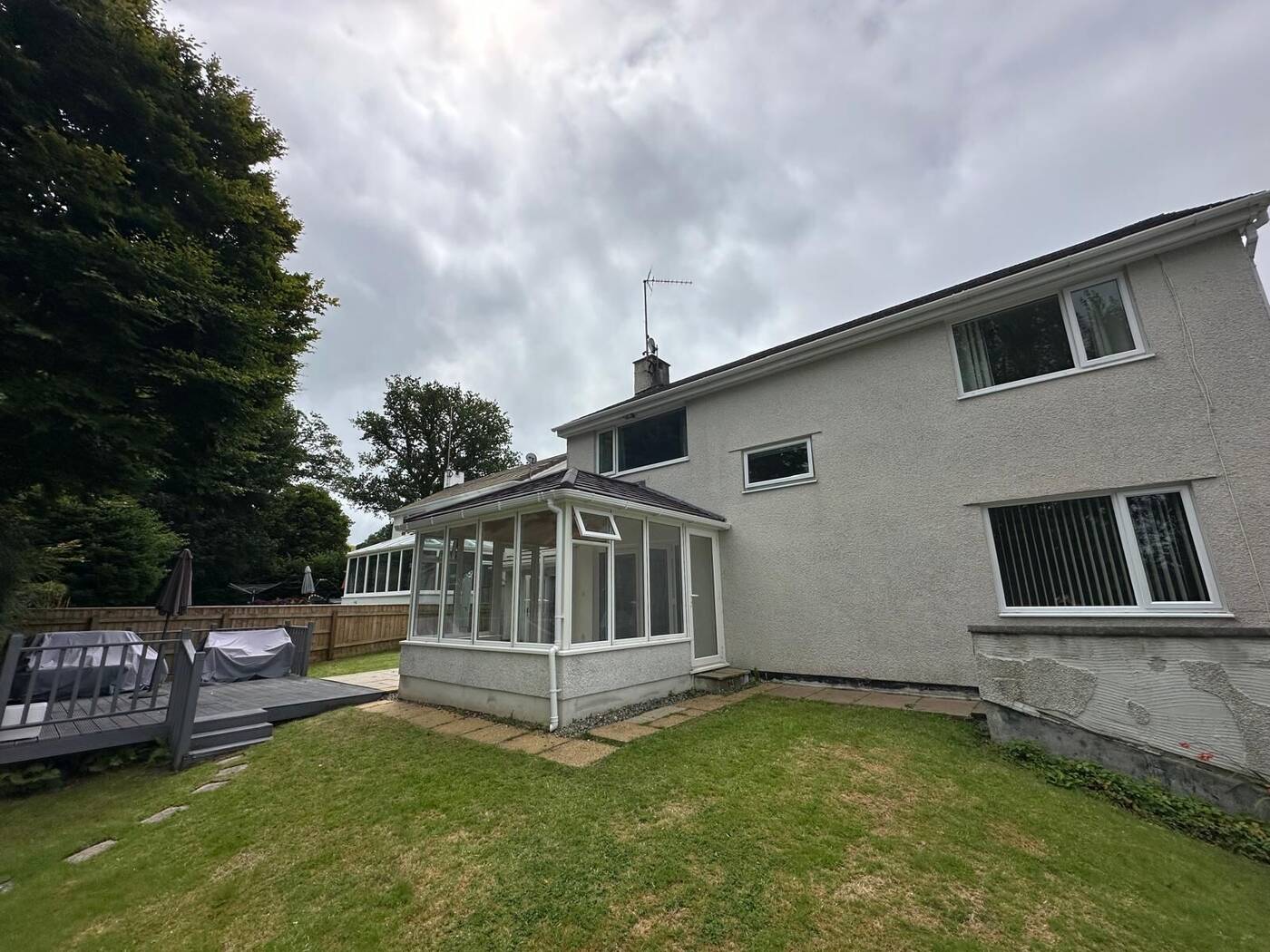
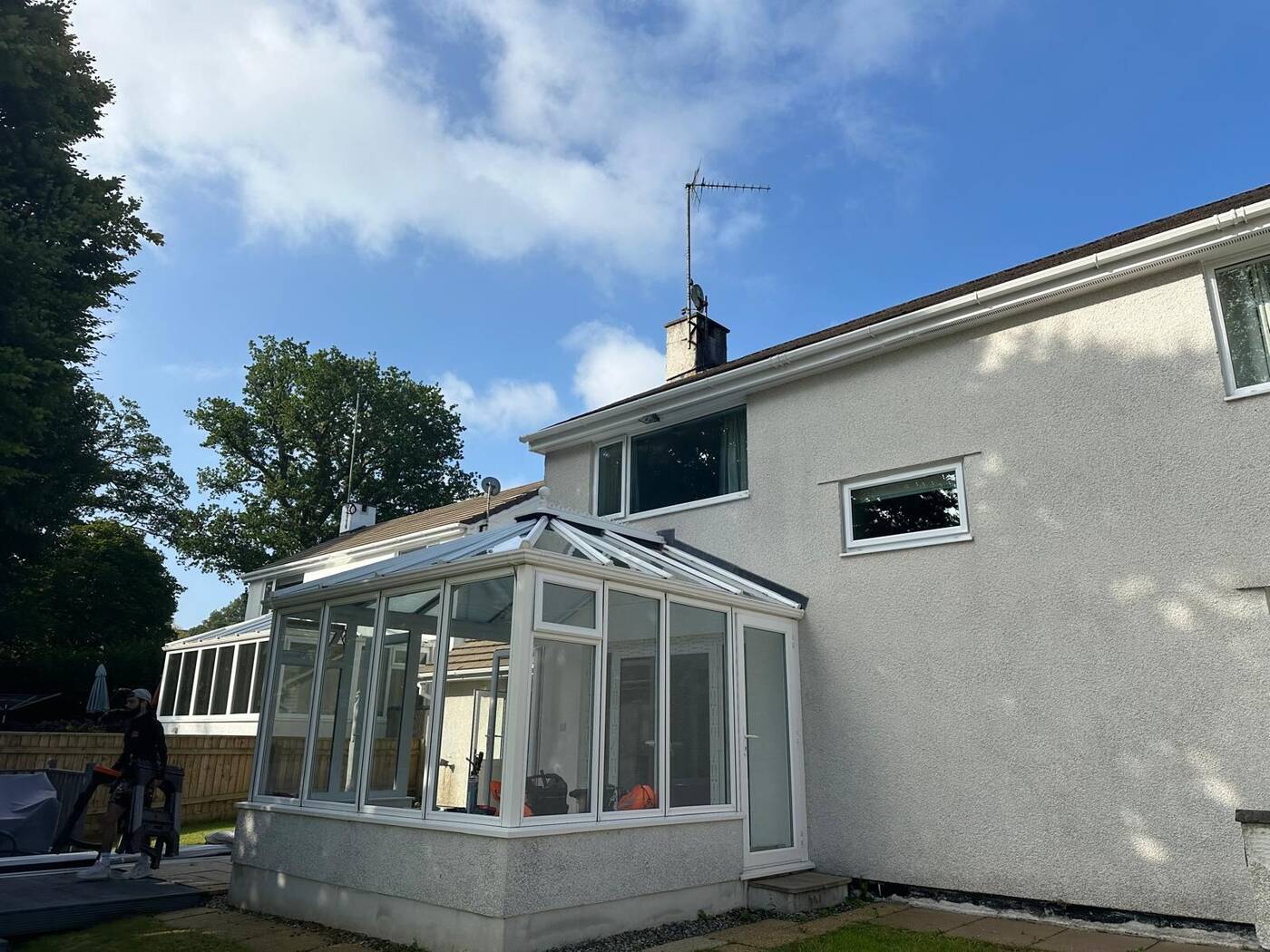
Plymouth — old glass conservatory roof replaced with a fully insulated tiled roof.
Drag the slider to compare
Four clear steps from first visit to finished room.
Survey
We visit, measure and discuss exactly how you want to use the room.
Specify
A clear written quote — materials, finish and timeline up front.
Install
Old roof off, fully insulated warm-roof system on, by our own crew.
Finish
Plastered ceiling, full clean-down and walk-through with you.
A conservatory you actually want to spend time in.
Cool in summer
No more trapped heat — the room stays comfortable on the hottest days.
Warm in winter
Insulated to modern building-reg standards so you keep the heat in.
10 year guarantee
Insurance-backed guarantee, plus a 40-year guarantee on the tiles.
Fast install
Most projects are completed in just 2–4 days by our own crew.
Benefits of Fixing an Overheating Conservatory
- Use your conservatory all summer — no more avoiding the room in warm weather
- No expensive cooling needed — save on fans and air conditioning costs
- Protect your furniture — no more UV fading and heat damage
- Comfortable for pets and plants — safe temperatures for everyone
- Also warm in winter — the same insulation works both ways
- Quieter in rain — bonus benefit when summer storms hit
Used to be 42°C in there by lunchtime. After the new roof — 23°C on the same kind of day. We had Sunday lunch in the conservatory in August for the first time ever. Should have done it years ago.
What does it cost?
Honest, typical price ranges so you can plan with confidence — every quote is bespoke after a free home survey.
What Does It Cost To Stop Overheating Permanently?
Comparison of common fixes — short-term and long-term:
- Solar reflective film — a few hundred pounds fitted, lasts 5–7 years, reduces heat gain by 30–50%
- External or internal blinds — reduces peak temperature by around 2–3°C, with ongoing cleaning
- Portable air conditioning — £400–£800 unit + ~£1–£2/hour to run all summer
- Insulated tiled roof replacement — from £6,000 fully fitted; lasts decades, reduces solar gain by 95%, and also fixes the winter cold
Replacement price guide
- Small lean-to: from £6,000 fitted
- Edwardian / Victorian: from £6,000
- Large P-shape: from £6,000
Plymouth, Devon & Cornwall.
A locally based crew covering the South West — most projects are within 30 minutes of our Barbican workshop.
Cooling Down Conservatories Across Plymouth
South-facing conservatories across the South West suffer most. Recent overheating fixes include homes in:
- Plymouth — Plymstock, Plympton, Mannamead, Mutley, Peverell, Crownhill, Hartley
- South Hams — Ivybridge, Yealmpton, Newton Ferrers, Modbury
- South-East Cornwall — Saltash, Torpoint, Callington
- West Devon — Tavistock, Yelverton
Why our warm roof outperforms a traditional conservatory.
Frequently asked questions.
Will blinds fix an overheating conservatory?+
Blinds reduce glare and direct sunlight but don't solve the underlying thermal problem — heat still enters through the roof and gets trapped. A roof replacement is the only permanent fix. Blinds alone typically reduce peak temperature by 2–3°C; a solid insulated roof reduces it by 10–15°C.
How quickly will I notice the difference after install?+
Immediately. From the first warm day after installation, the conservatory stays at a comfortable temperature instead of overheating. Most customers say it's the single biggest improvement they've ever made to their home.
Will my conservatory be darker?+
Slightly, but most customers prefer it. The harsh overhead sunlight is replaced with comfortable ambient light through windows. We can also fit Velux-style roof windows to keep the space bright — two skylights in a typical roof works really well.
How hot does a conservatory actually get in summer?+
We've measured 45°C+ in Plymouth conservatories on hot summer afternoons — roughly the temperature of a hot car parked in the sun. Glass and polycarbonate transmit up to 80% of solar energy directly into the room, and there's nowhere for the heat to escape.
Will solar reflective film work instead of replacing the roof?+
Solar films can reduce solar heat gain by 30–50%, but they also significantly darken the room, can damage existing seals, and need replacing every 5–7 years. They're a partial workaround rather than a real solution. An insulated tiled roof reduces solar heat gain by 95% and lasts decades.
How much does it cost to fix an overheating conservatory?+
A full insulated tiled roof replacement — the only permanent solution — starts from £6,000 fully fitted regardless of size or shape. Free written quote after a home survey.
Won't air conditioning be cheaper than a new roof?+
Up-front, yes — a portable AC unit is £400–£800. But running costs are high (around £1–£2/hour to run), units only cool when they're on, and you still get the greenhouse heat damage to furniture. A new roof is a one-off cost that solves the problem permanently and also fixes winter cold.
Will the new roof also help in winter?+
Yes — the same insulation that blocks summer heat retains winter warmth. Many customers find their heating bills drop noticeably and they can use the room comfortably 12 months a year, not just spring and autumn.
What about extractor fans or roof vents?+
Vents and fans help remove hot air but you can only extract heat as fast as it enters — and through a glass roof in summer that's a lot. They make the problem 10–20% better. A solid roof reduces the heat coming in by 95%, so there's barely any heat to remove.
Do you cover Plymouth and the surrounding area?+
Yes — we cover Plymouth, Plympton, Plymstock, Ivybridge, the South Hams, Saltash, Torpoint, Tavistock and across South Devon and South-East Cornwall. Travel is included in the quoted price.
Got questions?
Straight answers to the things people ask us most.
Get your free quote
Tell us a little about your conservatory and we'll come back to you within 48 hours. No pushy sales, no obligation.
Free Brochure
Get Our Free Conservatory Roof Replacement Brochure
Everything you need to know about our SupaLite™ insulated warm-roof system — tile finishes, internal options, the 2–4 day installation process, prices from £6,000 fully fitted, and our 10-year insurance-backed guarantee.
- Sent straight to your inbox in seconds
- No pushy sales calls — review at your own pace
- Real Plymouth project photos and customer reviews