
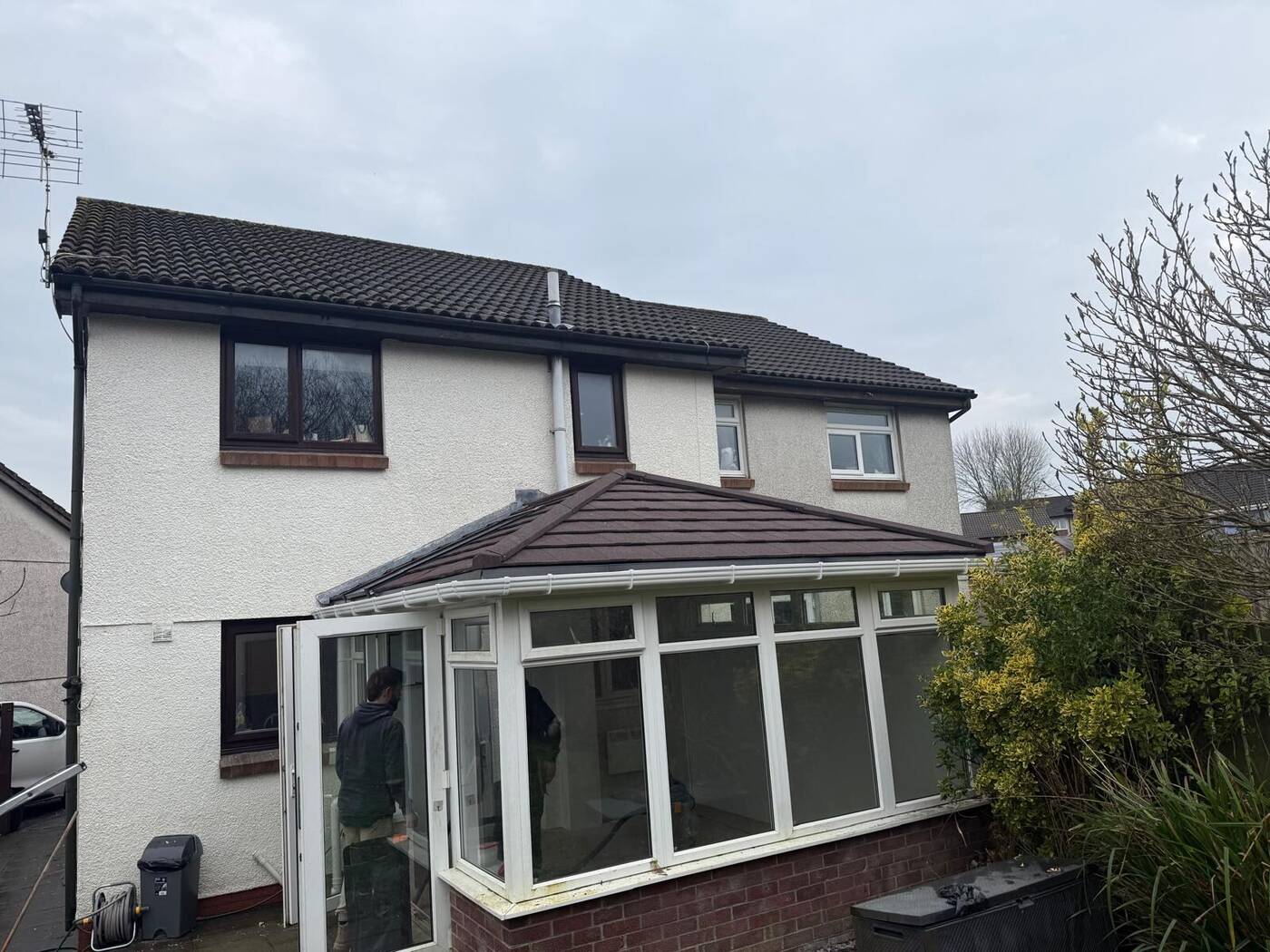
Plymouth's Conservatory Roof Specialists
Conservatory Too Cold in Winter?
A cold conservatory can lose heat through the roof, windows, floor or draughts. Assess the cause before replacing the roof. An insulated SupaLite roof reduces roof heat transfer; a free survey confirms the proposed specification and fixed quote.
- Warm in winter, cool in summer
- No more leaks or condensation
- Fully insulated tiled roof systems
No pushy sales · Same-day reply · 10-year insurance-backed guarantee
A simple, considered approach.
Why Your Conservatory Freezes in Winter
The short answer: a cold conservatory is losing its heat through the roof. Draught-proofing, thicker curtains and extra heating all help a little, but glass and polycarbonate roofs lose heat 15–20 times faster than a modern house ceiling, so the room never holds warmth. An insulated warm roof fixes it at source.
Many Plymouth homeowners abandon their conservatory from October to March because it's simply too cold to use. You turn up the heating, but the warmth escapes straight through the roof — frustrating and expensive, exactly when you'd most appreciate the extra room.
Below is how to work out where your heat is going, what's worth trying first, and what a permanent fix costs. We survey free across Plymouth, Devon and Cornwall.
Why most older conservatory roofs stop working.
Almost every project we visit starts with the same set of complaints.
Too hot in summer
Glass and polycarbonate roofs trap solar heat and make the room unusable.
Too cold in winter
Poor insulation lets warmth escape and pushes up your heating bills.
Leaks & condensation
Aging seals and single-skin roofs let damp in and cause recurring leaks.
Loud during rain
Thin roof materials amplify noise so the room never feels settled.
The Heat Loss Problem
U-value measures how easily heat passes through a building element — the lower the number, the better. Modern building regulations (Approved Document L) require new house roofs at 0.16 W/m²K. Conservatory roofs typically aren't even close.
- Polycarbonate roofs — typical U-value 3.0+ W/m²K, meaning heat passes through them rapidly
- Single-glazed glass roofs — around 5.0 W/m²K, even worse
- Modern double-glazed glass — better at 1.0–1.5 W/m²K, but still 5–10× worse than tiled
- Cold drafts develop as warm air rises to the cold roof, cools and sinks back down
- Radiators struggle to maintain temperature because heat escapes faster than it's generated
- Energy bills increase as you try to compensate for the heat loss with more heating
Checks that tell you where the heat is going
- Roof type — a bronze or opal multi-wall sheet is polycarbonate; clear panes with a sealed edge spacer are double-glazed glass. Polycarbonate is the worst performer.
- Hand test — on a cold evening, hold a hand near the ceiling. If the air there is markedly colder than at head height, the roof is the problem.
- Draught check — hold a tissue near the ridge, the door seals and the frame junctions. Movement at the frame is draughts; a cold ceiling with no movement is heat loss through the roof.
- Heating test — if a heater warms the room only while it is running and the chill returns within minutes, the fabric is not holding heat.
- Thermometer — a cheap room thermometer left overnight tells you far more than memory does.
What's worth doing first
Draughts, insulation gaps and heating
Air leaking through a door or frame junction and heat passing through the roof are different problems. Note where draughts occur, whether glazing is misted between panes and whether the room stays cold after heating. A cold spot where materials meet may need the insulation continuity assessed, not just thicker insulation elsewhere.
Keep vents clear and do not seal over damp or water ingress. If you already have a tiled roof but the room is cold, ask for the actual roof specification and an assessment of insulation gaps, moisture control and frame condition before assuming another roof is needed. We do not provide roof repairs; a specialist may be needed for an isolated defect.
A heater, radiator or underfloor heating supplies warmth but does not itself reduce heat transfer through the structure. Compare the roof, windows, floor, walls and ventilation together; we cannot promise a whole-home saving or a payback period. See our insulation options and replacement cost guide.
- Maintenance — replace perished door and window seals, fit draught excluders and a thermal blind. Cheap, and it takes the edge off.
- Repair — a failed double-glazed unit (misted panes) can be swapped by a glazier and will restore some performance, though a glass roof is still a cold roof.
- Replacement — if the room is unusable from October to March, no amount of heating fixes a 3.0 W/m²K roof. That's when the insulated warm roof is the answer.
A complete insulated warm-roof system.
Engineered to building-reg standards and finished beautifully inside and out.
The Warm Roof Solution
An insulated tiled roof achieves a U-value as low as 0.15 W/m²K — that's up to 20 times more thermally efficient than polycarbonate, and better than the building regulations minimum for a brand-new house roof. Heat stays in the room where it belongs.
- High-performance PIR insulation stops heat escaping through the roof
- The room heats up quickly and stays warm with minimal energy
- Eliminates cold drafts caused by the temperature difference at the roof
- Heating requirements depend on the complete room and its use
- Ventilation and moisture control still need attention
- Building Regulations compliant and certified on completion
What Goes On Top
We fit the LABC-approved SupaLite™ warm-roof system, sized to your conservatory and finished to match your home.
The thermal performance, layer by layer
- Lightweight composite tiles (Tapco, Metrotile or Britmet) — 40-year guarantee
- Breather membrane and battens — keeps the structure dry and ventilated
- 100–150mm PIR insulation — the layer that does the thermal heavy lifting
- SupaLite engineered frame — lightweight, sized to your conservatory
- Plasterboard ceiling — finished with skim plaster, ready for paint
The whole build-up achieves a U-value of 0.18 W/m²K as standard, dropping to 0.15 W/m²K with thicker insulation if you want best-in-class performance for a south-coast winter.
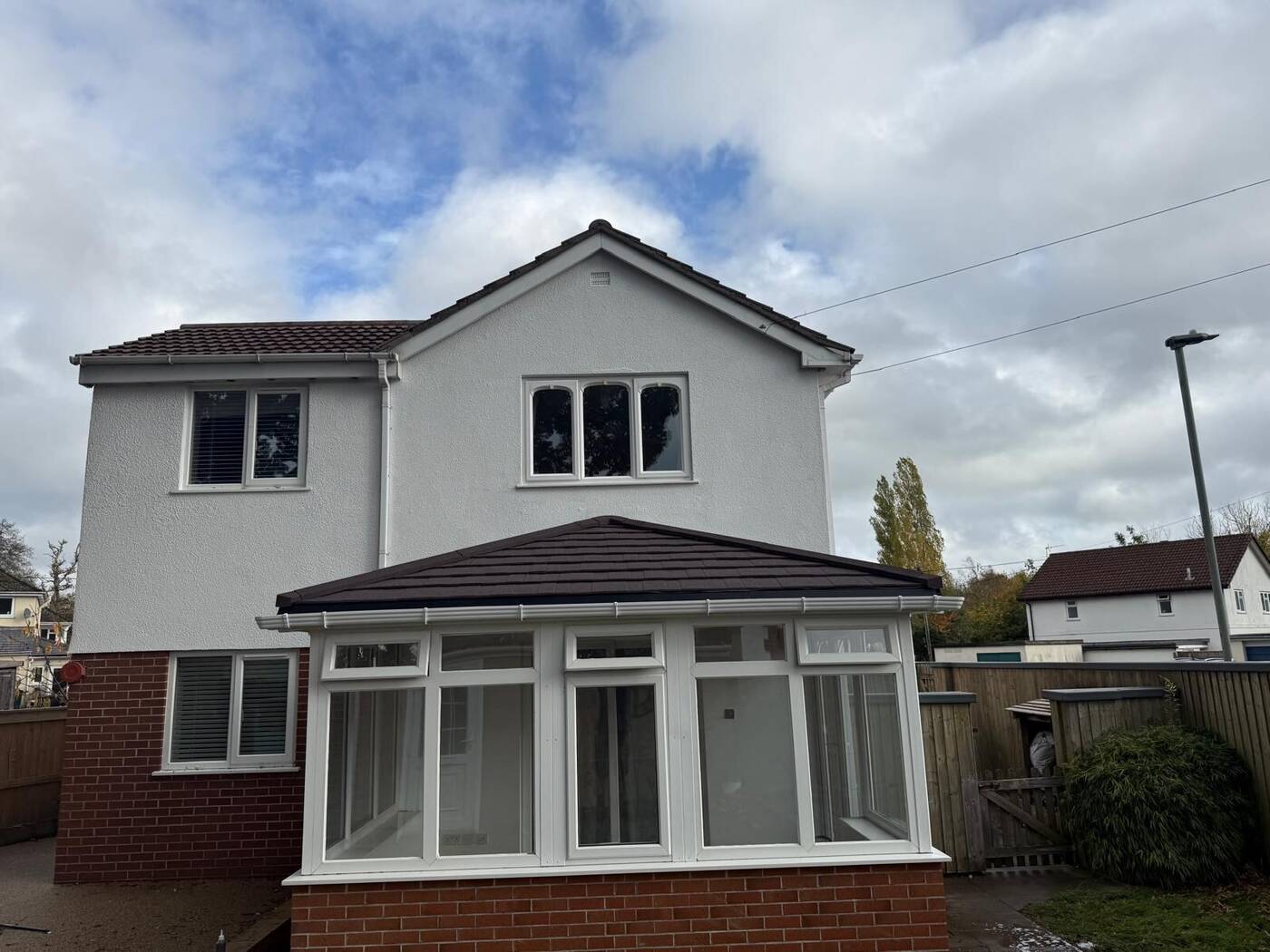
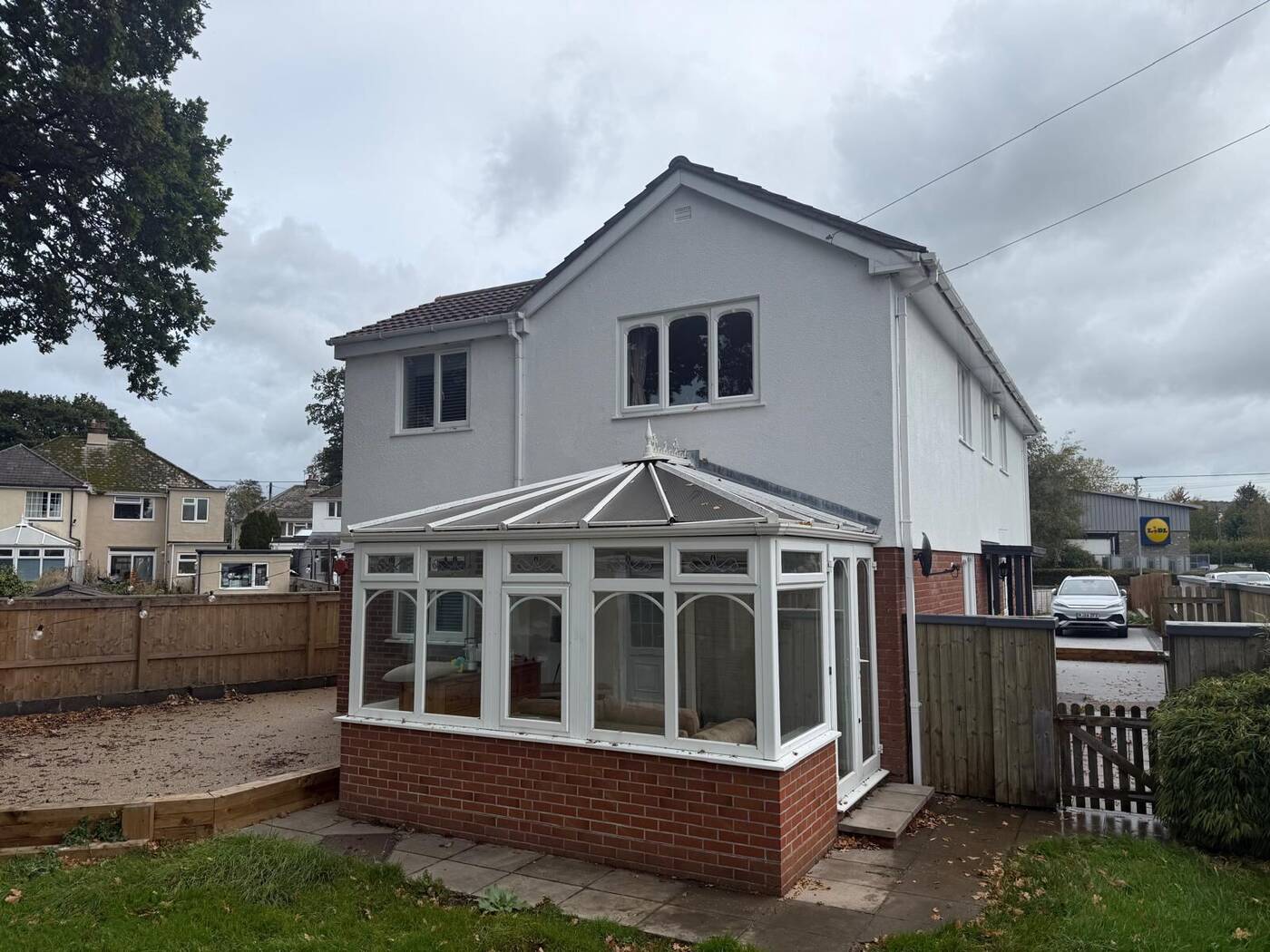
Before & after — fixing a freezing conservatory.
Drag the slider to see how a glass roof was replaced with a fully insulated warm roof, turning an unusable winter room into a year-round living space.
Drag the slider to compare
Four clear steps from first visit to finished room.
Survey
We visit, measure and discuss exactly how you want to use the room.
Specify
A clear written quote — materials, finish and timeline up front.
Install
Old roof off, fully insulated warm-roof system on, by our own crew.
Finish
Plastered ceiling, full clean-down and walk-through with you.
A conservatory you actually want to spend time in.
Cool in summer
No more trapped heat — the room stays comfortable on the hottest days.
Warm in winter
Insulated to modern building-reg standards so you keep the heat in.
10 year guarantee
Insurance-backed guarantee, plus a 40-year guarantee on the tiles.
Fast install
Most projects are completed in just 2–4 days by our own crew.
Benefits of a Warm Conservatory in Winter
- Use your conservatory 12 months a year — no more seasonal shutdown
- Lower heating bills — insulation means you need far less energy to maintain comfortable temperatures
- Cosy living space — perfect for a dining room, home office or sitting room
- No more cold feet — the room heats evenly without cold zones
- Also cool in summer — the insulation works both ways, preventing overheating too
- Building Regs sign-off — you get the certificate that matters at sale time
What does it cost?
Honest, typical price ranges so you can plan with confidence — every quote is bespoke after a free home survey.
What Does Fixing a Cold Conservatory Cost?
The realistic options:
- Electric heaters / oil radiators — cheap to buy but around £0.50/hour to run all winter, and the room rarely gets properly warm
- Adding a radiator on the central heating — a plumber's day rate; helps slightly, but most of the heat still escapes through the roof
- Underfloor heating retrofit — delivers warmth, but doesn't address the heat loss at the roof
- Insulated warm roof — advertised from £6,000; compare specification-based estimates and a fixed survey quote, without a promised payback period
Indicative calculator examples
One roof window and plastered ceiling selected; not completed-job prices or fixed quotes. The survey confirms the full specification.
- Small lean-to calculator example: £7,300 – £8,600
- Medium Edwardian / Victorian calculator example: £9,000 – £10,600
- Large P-shape calculator example: £12,200 – £14,400
Plymouth, Devon & Cornwall.
A locally based crew covering the South West — most projects are within 30 minutes of our Barbican workshop.
Warming Up Cold Conservatories Across Plymouth
North-facing or exposed conservatories across the South West are the worst affected, but every glass or polycarbonate roof loses heat fast. We cover:
- Plymouth — Plymstock, Plympton, Mannamead, Mutley, Peverell, Crownhill, Eggbuckland
- South Hams — Ivybridge, Yealmpton, Newton Ferrers, Modbury
- South-East Cornwall — Saltash, Torpoint, Callington
- West Devon — Tavistock, Yelverton
Why our warm roof outperforms a traditional conservatory.
Frequently asked questions.
How much will my heating bills reduce?+
Insulation reduces heat transfer through the roof, but bills depend on heating, other glazing, frames, floor, ventilation and how the room is used. We do not promise a percentage saving or a single-radiator result.
Can I use my conservatory as a real room all winter?+
Yes — that's exactly what a warm roof achieves. Many customers use their transformed conservatory as a dining room, home office, playroom, snug or lounge throughout the entire winter, including Christmas Day with the family.
What about condensation in winter?+
A warmer roof surface can reduce condensation risk, but humidity, ventilation and other cold surfaces still matter. An insulated roof does not eliminate every cause of condensation.
What U-value will the new roof achieve?+
Our standard system achieves a U-value of 0.18 W/m²K, with options down to 0.15 W/m²K. For comparison, building regulations for new house roofs require 0.16 W/m²K — so the new conservatory roof matches a modern house ceiling.
How much does it cost to fix a cold conservatory?+
An insulated roof replacement is advertised from £6,000. Price depends on shape, size and specification; assess draughts, glazing and heating too. A free survey confirms suitability and a fixed written quote.
Will an electric heater or oil-filled radiator work instead?+
Heaters can warm the air briefly but the heat escapes through the roof almost as fast as you generate it — like leaving the window open. Customers commonly run heaters all day in winter and the room never gets above 14–16°C. Insulating the roof solves the problem at source.
Do I need Building Regulations approval?+
Yes, in most cases — because the thermal envelope changes. We handle the application, the building inspector's visits and the final certificate as part of the project, so you don't need to do anything beyond signing the paperwork.
How long does the install take?+
Typically 2–4 days from old roof off to plastered ceiling finished. Your home stays watertight throughout the install, even overnight.
Will it also stop the room overheating in summer?+
Yes. The insulation works both ways — it stops heat escaping in winter and stops solar heat gain in summer. The same install that fixes a freezing conservatory also fixes overheating.
Underfloor heating vs new roof — which is better?+
Underfloor heating delivers warmth but doesn't address the heat loss problem — the warmth still escapes through the cold roof. The new roof is the better single investment because it stops the loss at source. Some customers pair the two on bigger jobs, but the roof alone is usually enough.
Get your free quote
Tell us a little about your conservatory and we'll come back to you within 48 hours. No pushy sales, no obligation.
Free Brochure
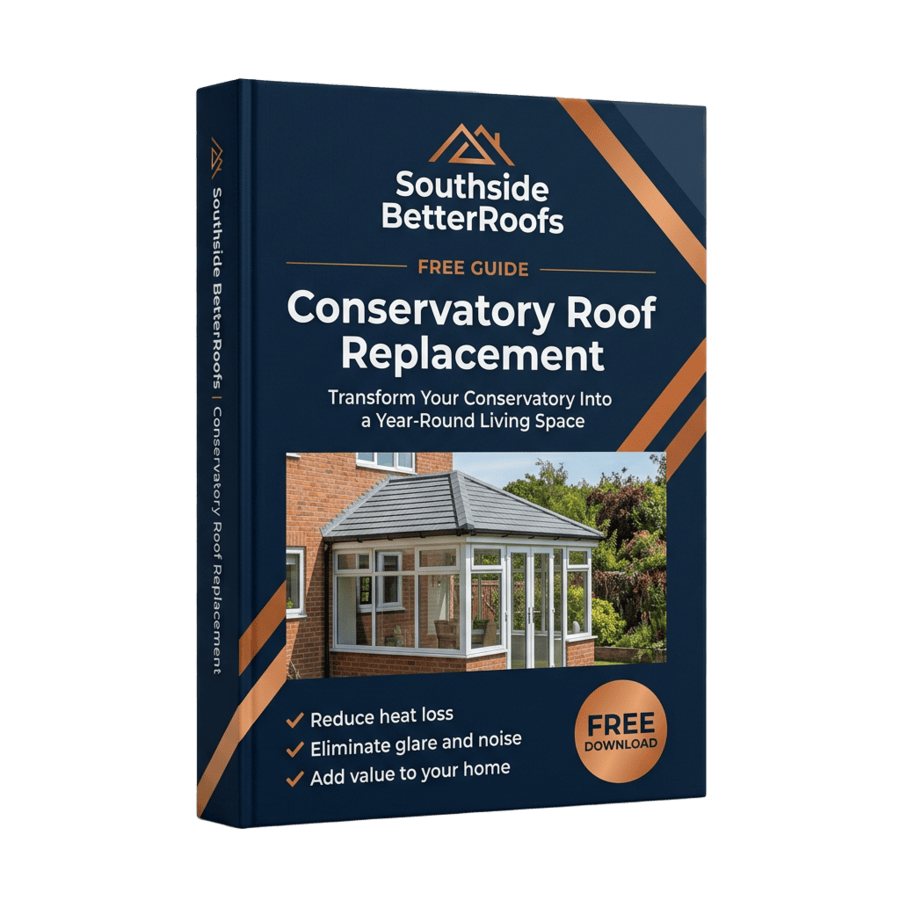
Get Our Free Conservatory Roof Replacement Brochure
Everything you need to know about our SupaLite™ insulated warm-roof system — tile finishes, internal options, the 2–4 day installation process, prices from £6,000 fully fitted, and our 10-year insurance-backed guarantee.
- Sent straight to your inbox in seconds
- No pushy sales calls — review at your own pace
- Real Plymouth project photos and customer reviews
Please check your Promotions or spam folder if the brochure doesn't arrive in your inbox.