Materials
Why Slate Conservatory Roofs in Plymouth Resist Storm Damage Better
Plymouth weather is hard on roofs. Here's why a slate-effect tiled conservatory roof handles storms, salt air and wind-driven rain better than glass or polycarbonate.
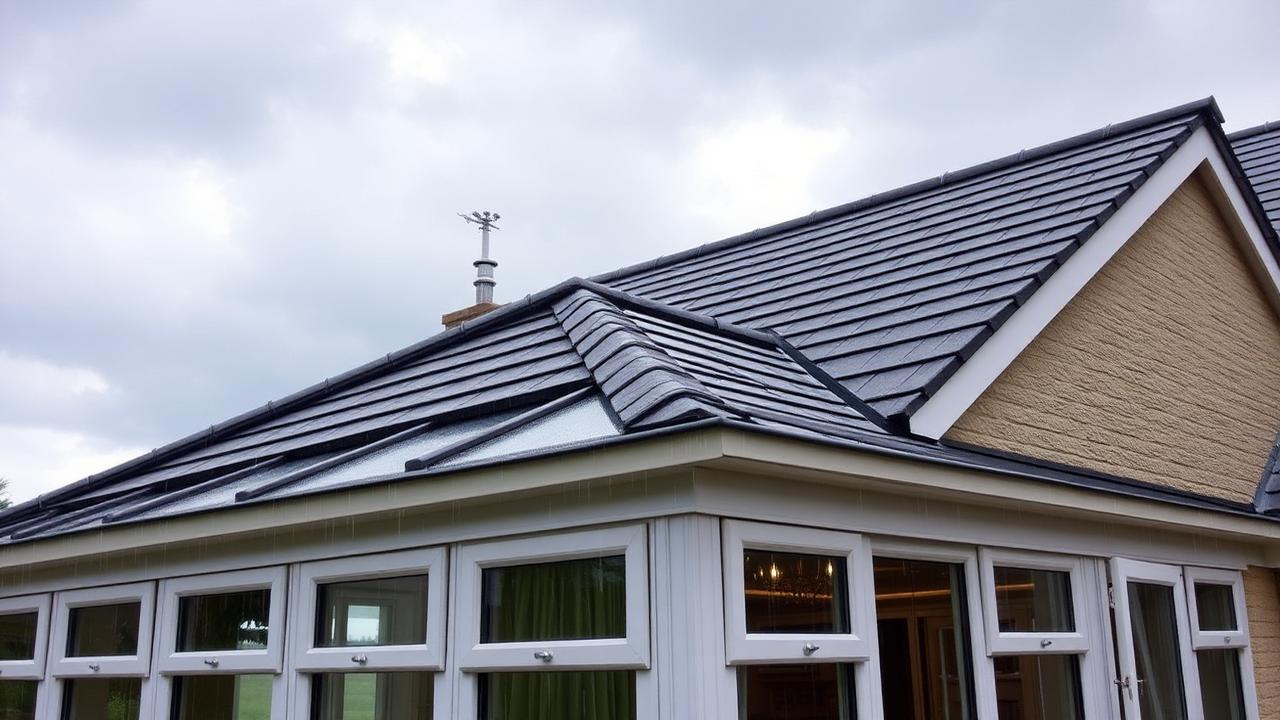
Plymouth gets the full force of Atlantic weather — wind-driven rain, salt air, sudden temperature swings and occasional named storms rolling in off the Channel. Glass and polycarbonate conservatory roofs were never designed for that kind of sustained punishment. A modern slate-effect tiled warm roof is — and that's exactly why it's the system we fit on every job from Plymouth to east Cornwall.
Why glass and polycarbonate fail in Plymouth weather
A glass conservatory roof relies on dozens of rubber gaskets between every panel. UV ages those gaskets, and the salt-laden coastal air around Plymstock, Saltash and the wider South Hams accelerates it. Once a single gasket gives way, wind-driven rain finds the gap — and the heavier the storm, the worse it gets.
Polycarbonate is worse. It becomes brittle after 10–12 years, develops hairline cracks around fixings, and yellows from UV exposure. By year fifteen, most polycarbonate roofs in Plymouth are actively failing — see the warning signs guide for what to look for.
What makes a slate-effect tiled roof different
- Solid, sealed surface. No glass-to-glass joints, no gaskets to perish. Wind-driven rain runs straight off.
- Lapped tiles, not single panels. Each tile overlaps the next, so even if one were damaged, water still has nowhere to enter.
- Mechanical fixing. Every tile is locked into the structure — no panels to vibrate loose in 60mph gusts.
- Coastal-grade coatings. SupaLite tiles are engineered for salt air and tested across UK coastal regions.
- Fully insulated underneath. Storm comfort and energy efficiency in the same install — see our energy efficiency guide.
The lightweight advantage
Traditional natural slate is too heavy for most conservatory frames — you'd need new footings, rebuilt frames and planning permission. The SupaLite slate-effect tile is a coated composite that looks identical from any normal viewing angle but weighs roughly half as much. The result: full storm performance with zero structural rebuild.
How it stacks up
| Roof type | Wind-driven rain | Salt-air durability | Storm lifespan |
|---|---|---|---|
| Polycarbonate | Poor | Poor | 10–15 years |
| Glass (sealed units) | Fair | Fair | 15–20 years (gasket re-seals required) |
| SupaLite slate-effect tiled | Excellent | Excellent | 25+ years |
Will I lose any natural light?
Less than you'd think. Most usable daylight comes through your side windows, not the roof. Where extra overhead light makes sense, we design in Velux roof windows — controllable, weather-tight, and in fixed positions where they catch the best light without adding heat-gain problems. We cover this in more detail in our warm roof vs glass roof comparison.
What storm damage actually looks like in Plymouth
Across Plymouth, Plymstock and Saltash we see the same pattern of storm callouts every winter:
- Lifted polycarbonate panels — wind catches the unsupported edge, and once one panel lifts, the next one follows. Replacement panels rarely match the originals after 10+ years of UV-yellowing.
- Cracked glass units — debris (slates from the main roof, falling branches, even garden furniture) shatters one or both panes of a sealed glass unit. Replacement is £400–£900 per panel.
- Failed gaskets after named storms — driven rain finds gaskets that were "almost" sealed and turns them into active leaks overnight.
- Lead flashing pulled away from the wall plate, usually after a high-pressure soaking that swelled and cracked old sealant.
A solid tiled warm roof eliminates all four failure modes in a single install. See the warning signs guide for what to inspect before the next storm hits.
What to do immediately after storm damage
- Photograph everything — outside and inside, before you touch anything. Insurance claims hinge on the photos.
- Contain the leak — buckets and towels for water, then move electronics and soft furnishings out of the room.
- Don't climb on the roof — most conservatory roofs aren't load- bearing for a person, especially when the structure is already compromised.
- Get a professional inspection within 48 hours. We do free post-storm inspections across Plymouth, Devon and Cornwall and write up findings you can attach to an insurance claim.
Will home insurance cover it?
Most buildings insurance policies do cover storm damage to a conservatory roof, but with two big caveats: the roof has to have been in serviceable condition before the storm, and the damage has to be from a single named event rather than gradual wear. If your roof is already on our repair-or-replace borderline, insurers usually contribute the cost of a like-for-like repair towards a full upgrade — your policy may pay a meaningful chunk of a replacement.
Lifetime cost: storm-prone glass vs SupaLite tiled
| Roof type | Storm repairs (typical) | Re-gasketing | Likely replacement | 20-year total |
|---|---|---|---|---|
| Polycarbonate | £800 – £1,800 | n/a | Yes, ~year 12 | £7,000 – £13,000 |
| Sealed glass | £1,200 – £2,800 | £600 – £1,200 | Borderline ~year 18 | £8,000 – £14,000 |
| SupaLite slate-effect tiled | Negligible | n/a | No | Initial install only |
What our installers check during a coastal survey
Plymouth's coastal exposure means the survey isn't just about the roof above your head — it's about the prevailing wind direction, salt-air exposure on your elevation, the condition of the wall plate, and how the existing UPVC frame is fixed. We measure each one before quoting, which is why our quotes hold up after a wet winter rather than coming back with surprise costs.
Free survey across Plymouth, Devon & Cornwall
Worried about how your existing roof will hold up this winter? Book a free survey. We cover Plymouth, Plymstock, Plympton, Ivybridge, Saltash, Devon and Cornwall, and we'll tell you straight whether a repair will hold or whether replacement makes more sense.
Frequently asked questions
Why are slate-effect tiled roofs better in Plymouth's weather?
They're solid, sealed and lapped — there are no glass-to-glass joints to perish. Wind-driven rain runs straight off, and the lightweight tiles are mechanically fixed so they don't lift in storm conditions the way poorly seated glass panels can.
Can a tiled roof handle Plymouth's salt air?
Yes. The tiles are made from coated steel or composite materials engineered for coastal exposure. We've installed them right along the South Devon and Cornwall coast with no salt-related issues over a decade later.
Are slate-effect tiles heavier than my conservatory can take?
No. The SupaLite slate-effect tiles are lightweight composites — roughly half the weight of natural slate — and were specifically engineered to sit on existing UPVC or aluminium conservatory frames without structural reinforcement.
Do slate roofs need maintenance?
Practically none. A clear-out of the gutters once or twice a year is the only routine care. The tiles themselves are essentially maintenance-free for the life of the roof.
How long do slate-effect tiled roofs last?
The SupaLite system is built to last 25+ years and comes with a 10-year insurance-backed guarantee. In practice, with sensible gutter maintenance, they comfortably outlast that.
Will a tiled roof make the conservatory dark?
Not if it's designed properly. Most natural light comes through the side windows. We add Velux roof windows where it makes sense, giving you controllable daylight without the heat-gain problem.
Free, no-pressure quote on your conservatory roof
Based in Plymouth — covering Devon & Cornwall. 10-year insurance-backed guarantee.
Ready to Transform Your Conservatory?
Get a free, no-obligation quote for your conservatory roof replacement. We'll visit your home, assess your conservatory, and provide a detailed written quote.
No pushy sales · Same-day reply · 10-year insurance-backed guarantee
Get your free quote
Tell us a little about your conservatory and we'll come back to you within 48 hours. No pushy sales, no obligation.