Energy & Bills
How a Lightweight Conservatory Roof Reduces Heating Bills in Winter
An insulated lightweight conservatory roof can cut your winter heating bills noticeably — here's how the heat-loss savings actually work, and what to expect.
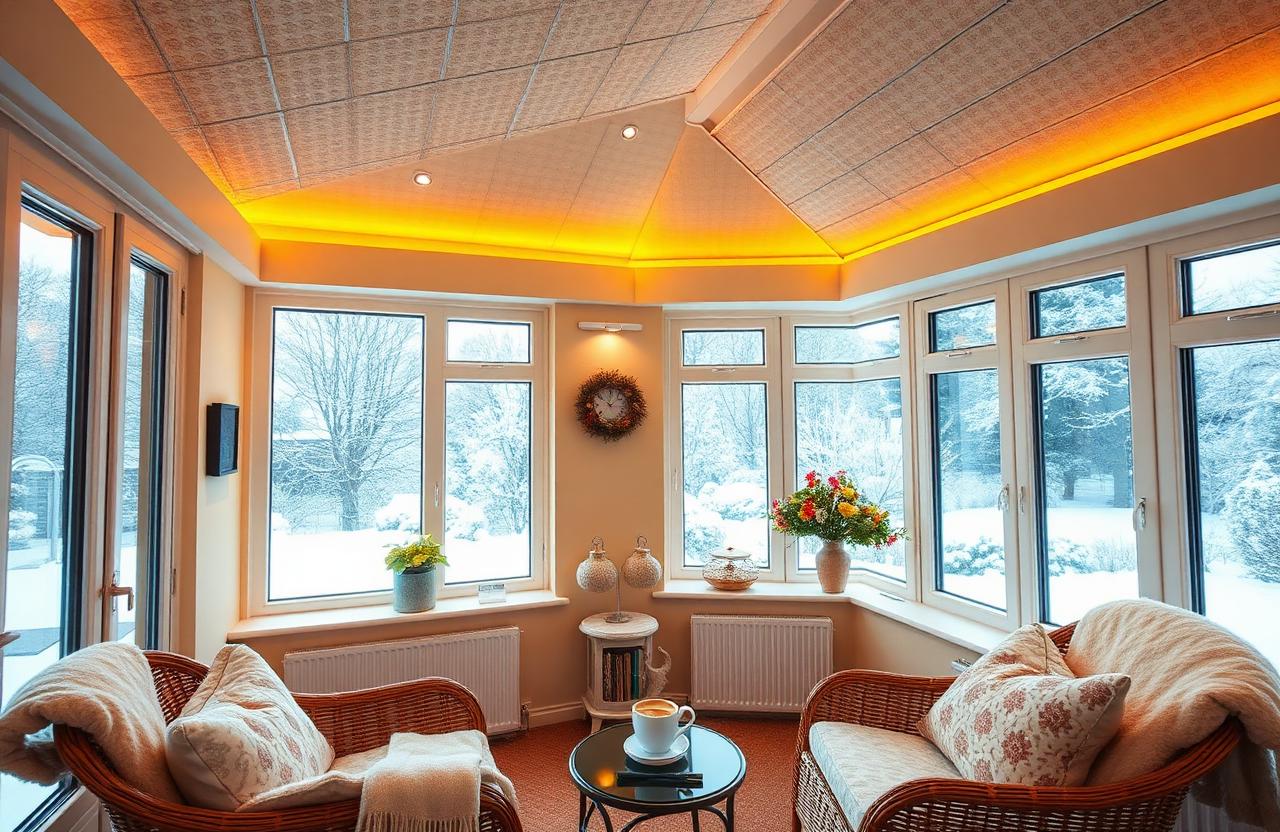
A glass or polycarbonate conservatory roof leaks heat as fast as your radiators can produce it. That's not opinion — that's physics. The good news is it's the single most fixable energy problem in most UK homes. Here's how a lightweight insulated conservatory roof actually changes your winter heating bills, and what to expect on day one, month one and year one.
How heat actually escapes from a conservatory
In winter, the radiator in your conservatory pumps warm air upwards. Warm air rises, hits the cold inner surface of a translucent roof, and three things happen at once:
- Heat conducts straight through the thin roof to the cold air outside.
- Some of it condenses on the cold inner surface and runs down the frames.
- Cold air drops back down the inside of the glass, creating a circulating draught the radiator now has to fight.
Your central heating ends up running constantly to compensate. Most conservatories with old roofs effectively become a hole in your home's thermal envelope.
Why “lightweight” matters specifically
Traditional tiled roofs solve the insulation problem but are heavy enough to need rebuilt frames, reinforced footings and often a full structural calculation. That's a £15,000–£25,000 job and frequently triggers planning permission.
A lightweight SupaLite warm roof gives you the same thermal performance — around 0.15 W/m²K — at roughly half the weight, so it sits safely on your existing UPVC or aluminium conservatory frames. The savings come from doing less structural work, not from compromising on insulation.
What the bills actually look like afterwards
| Month | Before warm roof | After warm roof | Saving |
|---|---|---|---|
| October | £18 | £8 | £10 |
| November | £42 | £18 | £24 |
| December | £68 | £32 | £36 |
| January | £74 | £34 | £40 |
| February | £62 | £28 | £34 |
| March | £38 | £16 | £22 |
Numbers are typical, not guaranteed — your saving depends on your home, heating system and how much you used the room before. Most customers also report using the conservatory far more after the roof goes on, which is the bigger win.
Beyond the bills
The thermal upgrade brings other things with it:
- No more rain noise. Even a light shower on a polycarbonate roof drowns out the TV. A solid roof is essentially silent.
- Summer comfort. The same insulation that keeps heat in during winter keeps it out during summer — see why conservatories overheat.
- No condensation. Cold-surface condensation disappears the day the roof goes on (why this happens).
- Genuine resale value. Buyers and surveyors treat a warm-roof conservatory as habitable square footage, particularly with building regs sign-off.
What it costs
Lightweight warm roof replacements in the Plymouth area are typically £5,500–£11,500 fitted. On most homes the energy savings, removed repair costs and added resale value pay back the upfront cost within five to eight years — and the comfort benefit is immediate. See our full cost guide for detailed pricing by conservatory size.
Free survey across Plymouth, Devon & Cornwall
We survey free across Plymouth, Plymstock, Plympton, Ivybridge, Saltash, the wider Devon and Cornwall areas. We'll measure your conservatory, confirm the existing frames are suitable, and send a written, fixed-price quote with no obligation. Request a free survey.
Frequently asked questions
How much can a warm roof save on heating bills?
Most customers report a noticeable drop in winter heating costs — often £20–£40 per month during the cold months — because the conservatory no longer drains the central heating system the moment radiators are on. Exact savings depend on your home, but the room finally holds heat instead of bleeding it.
Why are lightweight roofs better than traditional tiled roofs?
Traditional tiled roofs need rebuilt frames, footings and often planning permission because of their weight. A lightweight SupaLite roof gives you the same insulation performance at roughly half the weight — so it sits safely on your existing conservatory without expensive structural work.
What U-value does a lightweight insulated roof achieve?
Around 0.15 W/m²K — roughly 13× more thermally efficient than a typical glass conservatory roof. That's the number that determines how much heat escapes, and it's the single biggest reason your bills come down.
Will the room still feel like a conservatory?
Yes — only better. You keep the side windows, doors and views. The roof becomes a proper insulated ceiling instead of a heat sink. Most customers say it feels like an extension that happens to have lots of glass, rather than a 'summer room' that's only usable two months a year.
How fast will I notice the difference?
Immediately. The first cold evening after installation, the room holds heat instead of losing it within minutes of the radiator switching off. The first sunny day, the room stays comfortable instead of overheating.
Does the lightweight roof come with a guarantee?
Yes — a 10-year insurance-backed guarantee on the SupaLite system itself, plus our own workmanship guarantee on the installation.
Free, no-pressure quote on your conservatory roof
Based in Plymouth — covering Devon & Cornwall. 10-year insurance-backed guarantee.
Ready to Transform Your Conservatory?
Get a free, no-obligation quote for your conservatory roof replacement. We'll visit your home, assess your conservatory, and provide a detailed written quote.
No pushy sales · Same-day reply · 10-year insurance-backed guarantee
Get your free quote
Tell us a little about your conservatory and we'll come back to you within 48 hours. No pushy sales, no obligation.